.webp)
I'm gonna be straight with you: when I seriously decided to pursue the PMI-ACP certification and first looked at the PMI-ACP exam prep materials, my brain practically short-circuited. I was thinking, "What in the world have I signed up for? " Sound familiar? Well, grab a seat—because I'm about to walk you through everything, I learned the hard way, so you don't have to. After spending months studying Agile frameworks, talking to certified professionals, failing a few ugly practice tests, and eventually figuring out what actually works, I learned something important: the PMI-ACP exam prep process isn’t about memorizing fancy terms. It’s about learning how Agile thinking works when projects get messy. And trust me, they always get messy. Whether you’re wondering how to study for the PMI-ACP exam, how difficult it really is, whether it’s harder than PMP, or even if certifications still matter in the age of AI, I’m going to walk you through everything I wish someone had explained to me from day one.
What Is the PMI-ACP Certification (And Why Are So Many Professionals Chasing It)?
The PMI Agile Certified Practitioner (PMI-ACP) certification is designed for professionals working in Agile environments. Unlike traditional project management certifications that focus heavily on planning everything upfront, PMI-ACP is built around flexibility, collaboration, adaptability, and delivering value quickly. You’ll learn concepts from:
- Scrum
- Kanban
- Lean
- Extreme Programming (XP)
- Hybrid Agile approaches
And honestly? That matters more than ever right now. Companies are moving faster. Teams are more remote. AI is changing workflows. Businesses want people who can adapt when priorities shift overnight. That’s exactly why searches for PMI-ACP exam prep PDF, Agile certifications, and practice exams keep growing.
Is PMI-ACP in Demand?
Yes. And not in a “nice to have” way. In many industries, Agile knowledge has shifted from optional to expected. If you search job listings for project managers, Scrum roles, product managers, or Agile delivery positions, you’ll constantly see employers asking for:
- Agile experience
- Scrum knowledge
- PMI-ACP certification
- PMP certification with Agile experience
Tech companies, healthcare systems, consulting firms, finance companies, and even government projects are increasingly using Agile or hybrid delivery models. That means the PMI-ACP certification isn’t just trendy. It solves a real business problem.
Is the PMI-ACP Certification Worth It?
I had this question too. Because let’s be honest—certifications cost money, take time, and nobody wants to spend weeks studying for something that won’t actually move their career forward. For most people working in Agile environments? Yes, PMI-ACP is worth it. Especially if you want:
- Higher-paying project roles
- Better career credibility
- Agile leadership opportunities
- A stronger resume in competitive markets
- More confidence managing fast-moving teams
The biggest benefit isn’t just the certificate itself. It’s learning how Agile teams actually think when deadlines shift, priorities change, and stakeholders suddenly decide they want five new features by Friday.
How to Study for PMI ACP Exam?
I made a classic mistake at the beginning. I thought reading one book cover to cover would somehow magically prepare me. It didn’t. The PMI-ACP exam rewards understanding—not memorization. The smartest way to study is to layer your learning. Here’s the approach I wish I had followed sooner:
- Start with Agile fundamentals before touching practice exams.
- Use multiple study sources, not just one book.
- Take practice questions daily.
- Study Agile mindset deeply because PMI loves situational thinking.
- Review mistakes obsessively. Wrong answers teach you more than easy wins.
To build a solid foundation, start with these resources: Download PMBOK 6th Edition Download the PMI-ACP Exam Prep Ebook Using both together works surprisingly well because one gives you project management context while the other focuses directly on Agile exam prep.
How to Prepare for PMI-ACP Exam Without Burning Out
Here’s something nobody tells you: Studying longer doesn’t automatically mean studying better. I once tried cramming for six straight hours on a Saturday. By hour four, I was reading words and retaining absolutely nothing. A better strategy? Consistency. Try something like this:
- Week 1–2: Agile principles, Scrum basics, Agile mindset
- Week 3–4: Kanban, Lean, XP frameworks
- Week 5–6: Daily scenario-based practice questions
- Week 7–8: Full-length mock exams
- Final review: Weak areas only
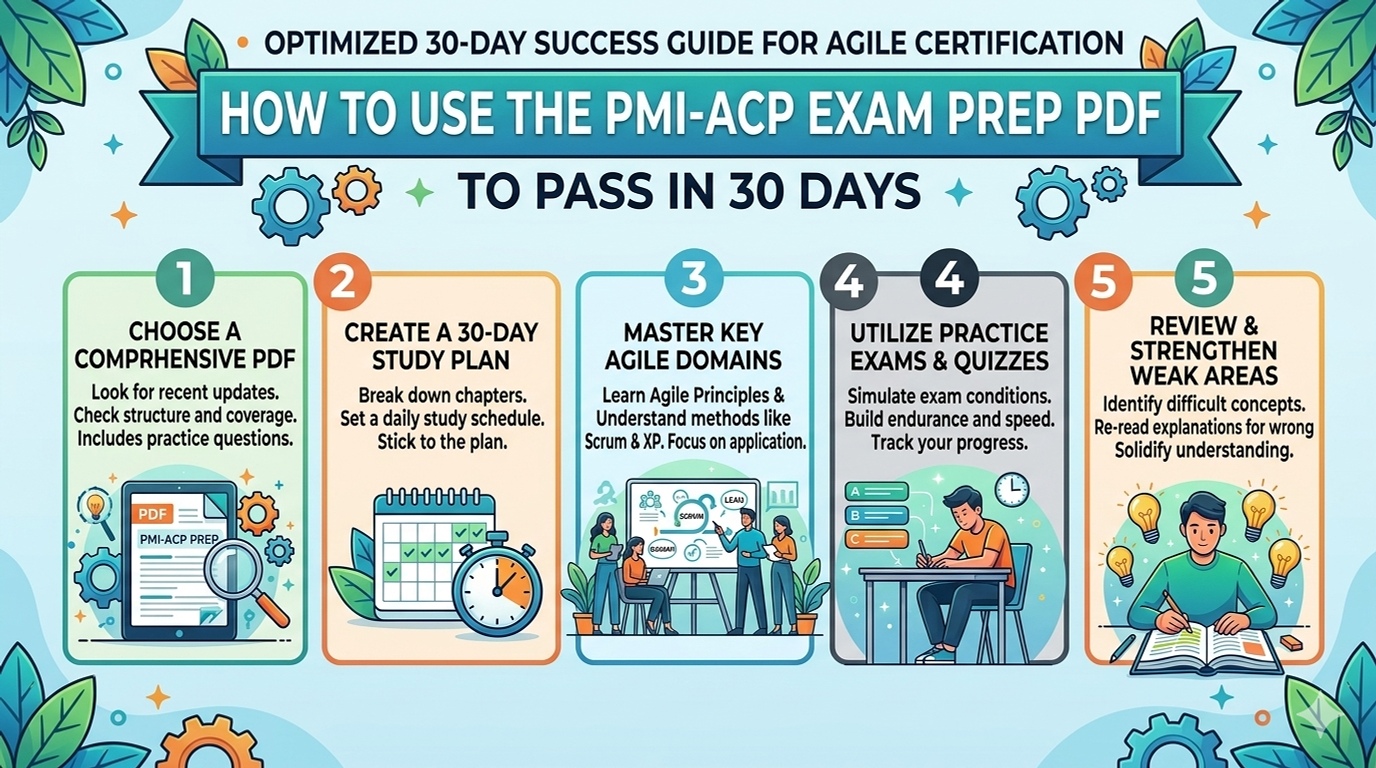
If you want a more structured roadmap, this guide helps: 👉 How to Use the PMI-ACP Exam Prep PDF to Pass in 30 Days
How Long Does It Take to Prepare for PMI-ACP?
This depends on your experience. If Agile already feels familiar because you work with Scrum teams or product development, you could realistically prepare in 4–6 weeks. If Agile still feels confusing? Give yourself around 8–12 weeks. Here’s a simple breakdown:
- Beginner: 8–12 weeks
- Project management experience: 5–8 weeks
- Agile background: 4–6 weeks
Personally, I think consistency beats marathon sessions. One focused hour every day usually beats panic-studying ten hours on a weekend.
How Long Do You Need to Study for PMI-ACP?
Most candidates need around 80–120 focused study hours. That sounds intimidating at first. But break it down: One hour a day for two to three months? Totally manageable. The trick isn’t speed. It’s repetition.
Is the PMI ACP Exam Difficult?
Short answer? Yes. But probably not for the reason you think. The PMI-ACP exam isn’t hard because the concepts are impossible. It’s hard because the questions are sneaky. You’ll often see two answers that both feel right. But PMI wants the answer that aligns best with Agile values. That means communication, collaboration, team empowerment, feedback loops, and delivering value quickly. Sometimes your real-world company habits can actually hurt you on the exam. Because PMI expects “ideal Agile thinking,” not necessarily how your workplace handles chaos. The best preparation? Practice realistic scenarios. Start here: 👉 Top 50 Realistic PMI-ACP Practice Questions (2026 Edition)
How to Pass the PMI-ACP Exam?
If I had to restart from zero tomorrow, here’s exactly what I’d do:
- Learn Agile mindset before memorizing frameworks
- Read the PMI-ACP Exam Prep book once for understanding
- Do daily practice questions
- Take at least 3 full mock exams
- Review every wrong answer carefully
- Study weak areas instead of rereading everything
One thing changed everything for me: I stopped answering questions based on how my company worked. I started answering based on: “What would an ideal Agile practitioner do?” That mindset shift helped massively.
Which Is Harder, PMP or ACP?
This debate comes up constantly. And the honest answer is: They’re hard in different ways. PMP is broader. You’re dealing with larger concepts, predictive project management, budgeting, planning, stakeholder management, and more content overall. PMI-ACP is narrower but trickier. Why? Because the questions feel more situational. Less memorization. More judgment. For many professionals:
- PMP: Harder because of volume
- PMI-ACP: Harder because of mindset
So… is PMI-ACP harder than PMP? For people new to Agile? Sometimes yes. For experienced Agile practitioners? Usually not.
How to Crack the PMP Exam in the First Attempt?
Funny enough, PMI-ACP preparation often helps with PMP because Agile concepts now play a huge role in modern PMP exams. If passing PMP fast matters to you:
- Focus on scenario-based learning
- Take timed mock exams
- Study PMBOK concepts deeply
- Learn Agile properly
- Review weak areas instead of rereading easy topics
This article may help: 👉 How to Pass the PMP Exam Faster (Without Burning Out)
Can I Pass the PMP in 2 Weeks?
Technically? Maybe. Realistically? For most people, probably not. If you already have years of project management experience and understand Agile deeply, two intense weeks could work. But for the average person? Trying to cram PMP into two weeks feels like binge-watching an entire semester of college lectures before finals. Possible. Not fun. Definitely risky.
What Is a PMP Salary?
Let’s talk about something everyone secretly Googles. Money. PMP-certified professionals in the United States often earn significantly more than non-certified project managers. Depending on experience, location, and industry, many salaries land well into six figures. And professionals who combine PMP + PMI-ACP often become especially valuable because they understand both traditional and Agile delivery models. In simple terms: The more problems you can solve, the more companies are willing to pay you.
Will PMP Be Replaced by AI?
I don’t believe so. Will AI change project management? Absolutely. It already is. AI can automate scheduling, reports, documentation, and even risk forecasting. But leading teams? Managing stakeholder conflict? Handling difficult conversations? Helping teams recover after a failed sprint? That still feels deeply human. I see AI as a really smart assistant—not a replacement. The project managers who thrive in the future will probably be the ones who know how to combine Agile thinking with AI tools.
A Book Recommendation That Actually Helped
Out of all the resources I tested, one book stood out because it explained Agile concepts without making me feel like I was reading a robot-written textbook: PMI-ACP Exam Prep by Mike Griffiths. It’s practical, beginner-friendly, and honestly helped Agile concepts click faster. If you’re serious about passing, it’s worth reading alongside the PMBOK.
Ready to Start Your PMI-ACP Exam Prep?
If I could go back and give myself advice before starting this journey, it would be simple: Don’t overthink it. Study consistently. Practice questions daily. Focus on Agile mindset—not memorization. And remember: nobody feels fully ready. At some point, you stop preparing and trust the work you’ve already done. Start here: 📘 Download PMBOK 6th Edition 📗 Download the PMI-ACP Exam Prep Ebook