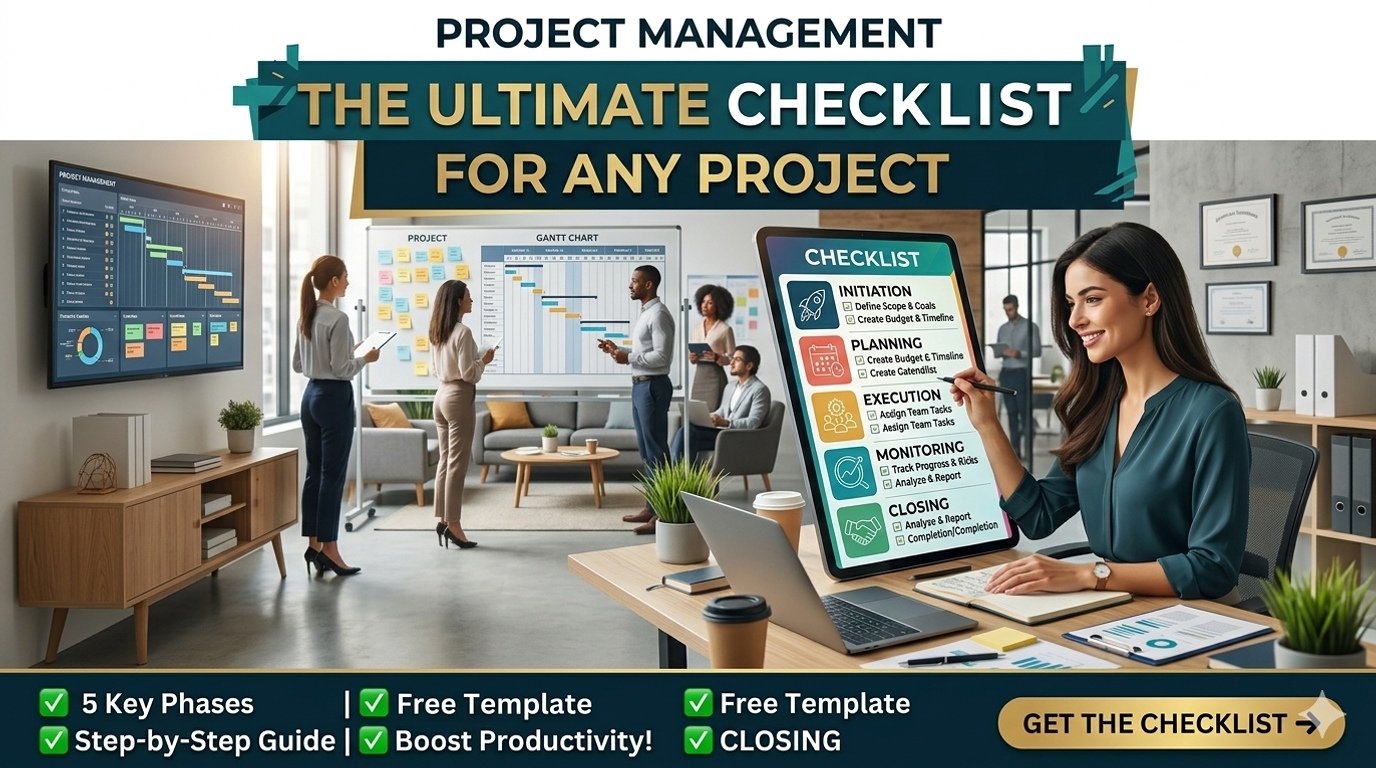
I'm asked all the time how to kick off a project without getting buried under a mountain of tasks. My answer is simple: use a flexible, practical checklist that covers people, process, and proof. It's not about rigid rules; it's about momentum, clarity, and the people who make it real. Here's the ultimate project management checklist I rely on for everything from a website refresh to a big product rollout.
And a little Canadian memory to set the tone: during a winter kickoff in Toronto, our team huddled around a napkin whiteboard in a Tim Hortons as the snow piled outside. We mapped objectives, identified owners, and agreed on a rough timeline. The coffee cooled, the plan warmed up, and I learned that great projects sprint from good communication and simple structure—no matter the weather.
The Ultimate Project Management Checklist for Any Project
Kickoff with clarity
- Define the project's objective in one crisp sentence
- Identify sponsors, stakeholders, and decision makers
- Draft the project charter and define success criteria
- Agree on the primary scope and boundaries
Plan with purpose
- Break down scope into a simple Work Breakdown Structure (WBS)
- Estimate effort, durations, and budget
- Set milestones and a lightweight schedule that predicts risk
- Choose a collaboration tool and a visible board (Kanban or Gantt)
- Draft a communication plan and escalation paths
Build risk and quality in
- Create a risk register with probability, impact, and owners
- Define acceptance criteria and quality checks
- Assign clear roles and responsibilities
Execute and monitor the pulse
- Assemble the team, assign owners, and hold regular standups
- Track progress with a dashboard and weekly reviews
- Manage scope changes with a simple change log
- Monitor budget, resources, and vendor performance
- Keep stakeholders informed with consistent updates
Close with confidence
- Verify deliverables meet acceptance criteria
- Document lessons learned and archive project docs
- Celebrate wins and recognize the team
- Transition outcomes to the operations team (where applicable)
If you like this practical approach, you might also enjoy Getting Things Done by David Allen. It’s a classic in personal productivity and pairs nicely with pragmatic project planning.
For a standards-based reference you can download, check out the PMBOK 6th Edition PDF here: PMBOK 6th Edition PDF.