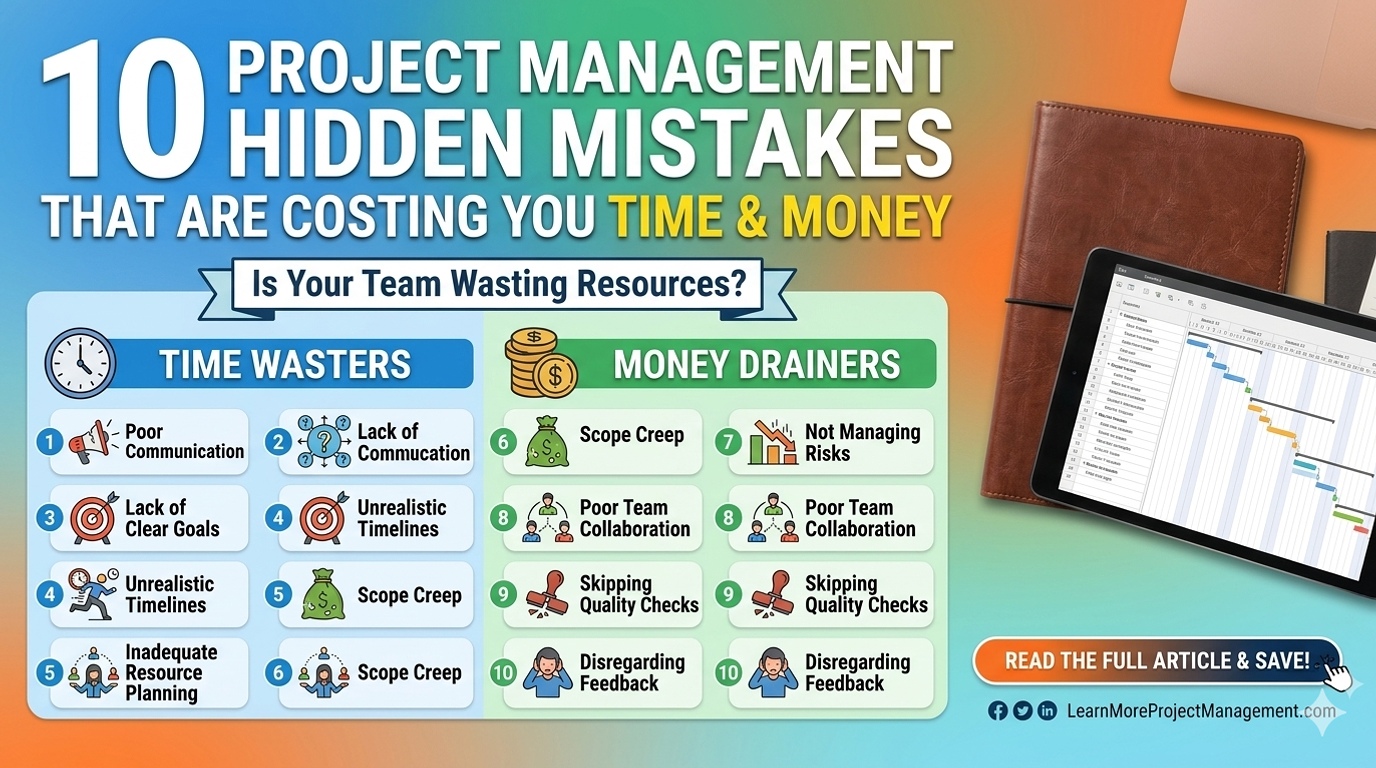
I’ve learned that great project management is less about fancy tools and more about making the plan stick. I’ve watched good teams stumble because of small, repeated mistakes. And yes, this happens to everyone, even me on a Monday morning after a run-in with a double-double at Tim Hortons. In Canada, we value clear communication, steady pacing, and a plan that survives the first sprint. Here are the 10 mistakes that cost you time and money—and how to fix them before they derail your project.
10 Project Management Mistakes That Are Costing You Time & Money
-
1) Not defining a clear project charter and goals
Without a charter, teams wander. scope drifts, priorities flip, and stakeholders end up with mixed messages. I’ve wasted weeks chasing phantom milestones because we never pinned down what “done” actually looked like. Fix: draft a concise charter with a measurable objective, the success criteria, high-level scope, and a rough timeline. Share it early, revisit it often.
-
2) Skipping stakeholder analysis and a solid communication plan
Who needs updates, and when? If you don’t map stakeholders and their needs, you’ll dodge the hard conversations until it’s too late. I’ve seen last-minute scope changes derail sprints because the right people weren’t looped in. Fix: identify key players, assign a communication cadence, and document a simple RACI (Responsible, Accountable, Consulted, Informed).
-
3) Underestimating the work and lack of a clear WBS
A vague to-do list is a recipe for surprise outages. When tasks aren’t decomposed into actionable chunks, estimates go from plausible to fantasy. Fix: build a work breakdown structure (WBS), break tasks into bite-sized pieces, and attach a rough estimate to each piece.
-
4) Ignoring risk until it bites
Risks aren’t bad vibes; they’re real chances to improve. I’ve watched teams scramble when a supplier delays or a critical person is unavailable. Fix: run a quick risk workshop, create a risk log, and assign owners with ready-made response plans.
-
5) No formal change control
Scope creep sneaks in when changes aren’t evaluated. I’ve seen projects swell by 20% simply because we approved a “small tweak” without impact analysis. Fix: implement a lightweight change control process, log every change, and rebaseline timelines and budgets.
-
6) Overcomplicating tools and underutilizing the team
Gantt charts, dashboards, and workflows are great—when they actually serve the team. Too many tools create busywork and misalignment. Fix: pick a few practical tools, align them to how your team works (not the other way around), and keep it simple with a clear purpose for each one.
-
7) Unrealistic time estimates
We tend to undersell tasks because we want to look efficient. Then reality hits—delays compound, morale dips, and deadlines slip. Fix: use historical data, add buffer time for unknowns, and review estimates after every milestone.
-
8) Budget blindspots and poor tracking
Hidden costs, late invoices, or scope changes without budget alignment eat profits. I’ve watched projects stall when the burn rate outruns the plan. Fix: track spend weekly, forecast at regular intervals, and flag variances early with corrective actions.
-
9) Unclear roles and responsibilities
People do what they think is expected, not what you’ve written down. RACI isn’t a joke; it’s a lifeline. Fix: clarify ownership for each task, publish roles in a simple chart, and keep it updated as the team shifts.
-
10) Treating lessons learned as an afterthought
If you don’t capture what worked and what didn’t, you’re doomed to repeat the same mistakes. Fix: set a short retrospective at project milestones, document key takeaways, and apply improvements in the next phase.
Want a formal standard to lean on? PMBOK 6th Edition PDF is a solid reference that many teams rely on to align practices across planning, execution, and delivery.
Speaking of practical reads, I also love a book that helps you stay on top of your personal workload: Getting Things Done by David Allen. It’s not about rocket science—it's about turning big goals into doable next steps, one task at a time.
And for a touch of Canadian flavor that keeps me grounded, I’ll admit I’ve set up a quick planning session after a morning skate or a coffee break at Tim Hortons. Sometimes a quick chat over a double-double is all you need to reset priorities, align on the top three tasks, and power through the day with focus.
If you’re just starting with project management, keep these tips in mind. Start small, measure what matters, and iterate. Time and money will thank you for it, one milestone at a time.