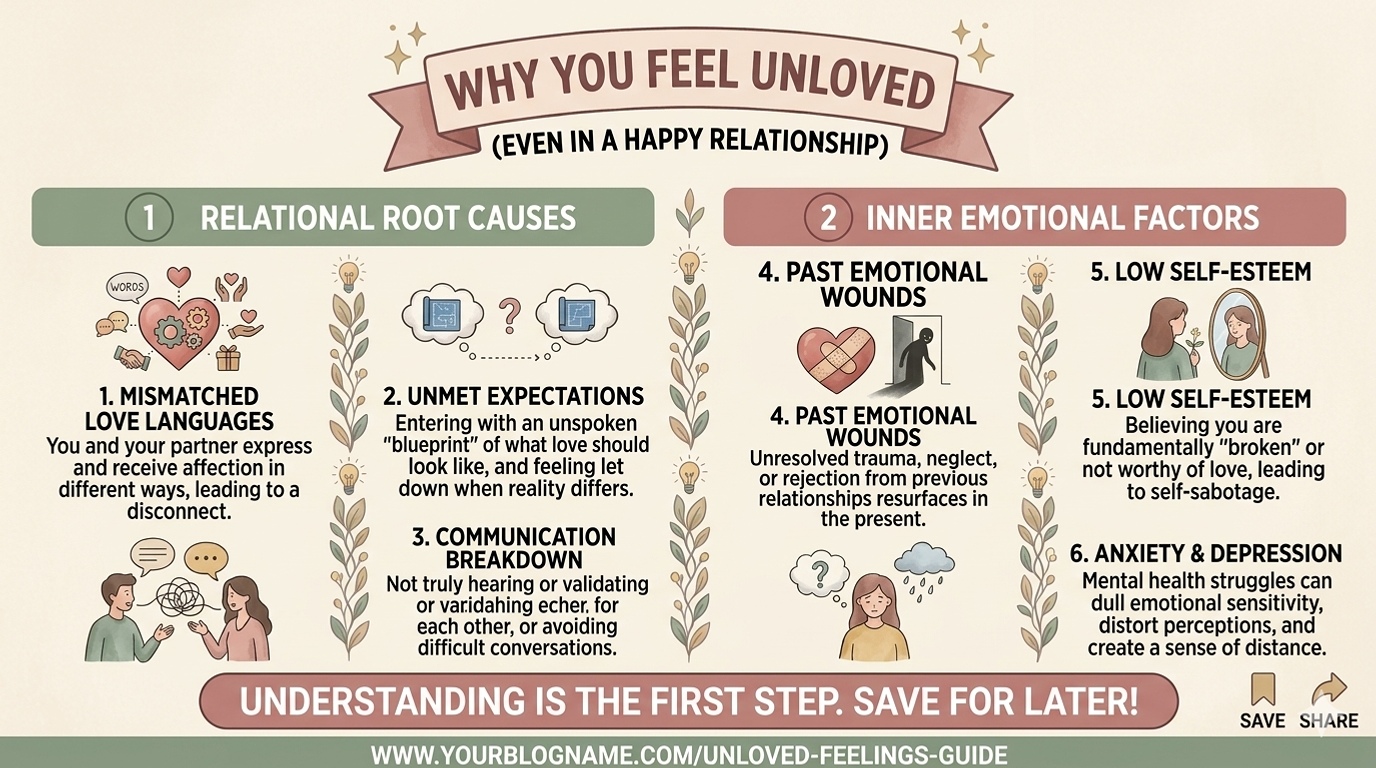
Why Some People Feel Unloved Even in Happy Relationships
I’ve learned that love isn’t a constant glow. It’s a messy mix of moments, miscommunications, and the tiny choices we make every day. I used to believe that if life looked good—from date nights to shared chores—affection would always feel obvious. But I’m here to tell you that happiness on the surface doesn’t automatically drown out the ache of feeling unseen. I’ve felt it. I’ve wrestled with it. And I’ve found a few keys that helped me move from wondering if I’m loved to knowing I am—and how to feel that more fully.
Two truths that can feel opposite but live side by side
- You can be surrounded by warmth and still crave deeper emotional closeness.
- Words of praise may not land the way you think they should, even when your partner is faithful and kind.
What unloved really sounds like in everyday life
It’s the quick glance that misses your mood. It’s the plate left in the sink while you’re hoping for a shared moment. It’s a quiet ache that says, “I’m here, but am I really seen?” I call it the gap between happiness and emotional intimacy. The feeling isn’t about betrayal or big fights. It shows up in tiny acts or omissions that chip away at your self-worth over time.
A little Canadian moment that shapes my view
One winter, after a chaotic week, I grabbed a double-double from Tim Hortons and trudged through slushy streets to meet my partner. The hockey game was loud. Friends texted funny memes. Still, I felt like the room didn’t quite hear me. That night, the snow outside was loud enough to drown out my own worries. It was a small moment, but it stuck. If we’re going to build real connection, it’s the everyday conversations that count—the ones that feel awkward but are essential.
Practical shifts that help close the gap
- Call out your needs in concrete terms. Don’t assume your partner can read your mind. Say, “I need a hug and a moment of focused attention after a tough day.”
- Finish each day with a simple check-in. A few minutes of calm, honest sharing beat days that end in silence.
- Notice nonverbal cues. A smile that doesn’t reach the eyes or a pause before replying can tell you more than words sometimes do.
- Create tiny rituals that say “you matter.” It could be a 5-minute recap after dinner or a shared coffee before bed.
- Work on your self-worth alongside your relationship. You deserve to feel secure, seen, and valued.
Are you asking the right questions?
Ask yourself and your partner open, curious questions. “What small moment made you feel loved today?” or “What would help you feel safer sharing something vulnerable?” The goal isn’t to force perfection but to invite honesty and steady, reliable warmth into your day.
If you want a simple, trusted framework to tune into your partner’s needs and your own, consider picking up a resource that many couples swear by. The idea is not to replace conversation but to guide it. The 5 Love Languages can help you articulate affection in a way that actually lands. It’s a quick, practical read that helped me reframe how I give and receive love, especially during pensive evenings at home.
Quick binge-worthy ideas for better communication in relationships
- Try “pause and reflect” before replying in a tense moment. A short pause can save a lot of hurt.
- Share appreciations, not just needs. Acknowledge the little things your partner does that you value.
- Record a 2-minute voice note if you’re better with tones rather than words. Send it when you’re ready.
- Experiment with journaling your emotions for a week. You might notice patterns you hadn’t seen before.
So here’s what I’ve learned: feeling unloved isn’t a verdict. It’s a signal. A signal that says you deserve more precise, compassionate communication and steady emotional safety. And yes, it’s possible to feel more connected even in the busy, everyday life of a happy relationship.
If you’re curious about turning these ideas into everyday practice, check out The 5 Love Languages — The secret to love that lasts. It’s a straightforward guide that helped me understand how language shapes trust, closeness, and self-worth. Download it and see what changes for you.
You're not alone in this. I’m learning alongside you—one small, honest conversation at a time. If you found this helpful, share a moment you tried with someone you care about. And keep exploring how love languages, emotional intimacy, and honest communication can transform the day-to-day of your relationship.