After Reading Rich Dad Poor Dad, I Realized Why Most People Never Get Rich
I picked up Rich Dad Poor Dad after a friend kept saying it changed the way he thought about money. I’m a regular person, not a finance guru, living in Canada, juggling work, grocery runs, and the occasional hockey game. The moment I finished the first chapter, I felt a shift. It wasn’t gimmicks or a shiny shortcut. It was a straightforward reframe: wealth isn’t about earning more every year; it’s about how you think about assets, cash flow, and your own money education.
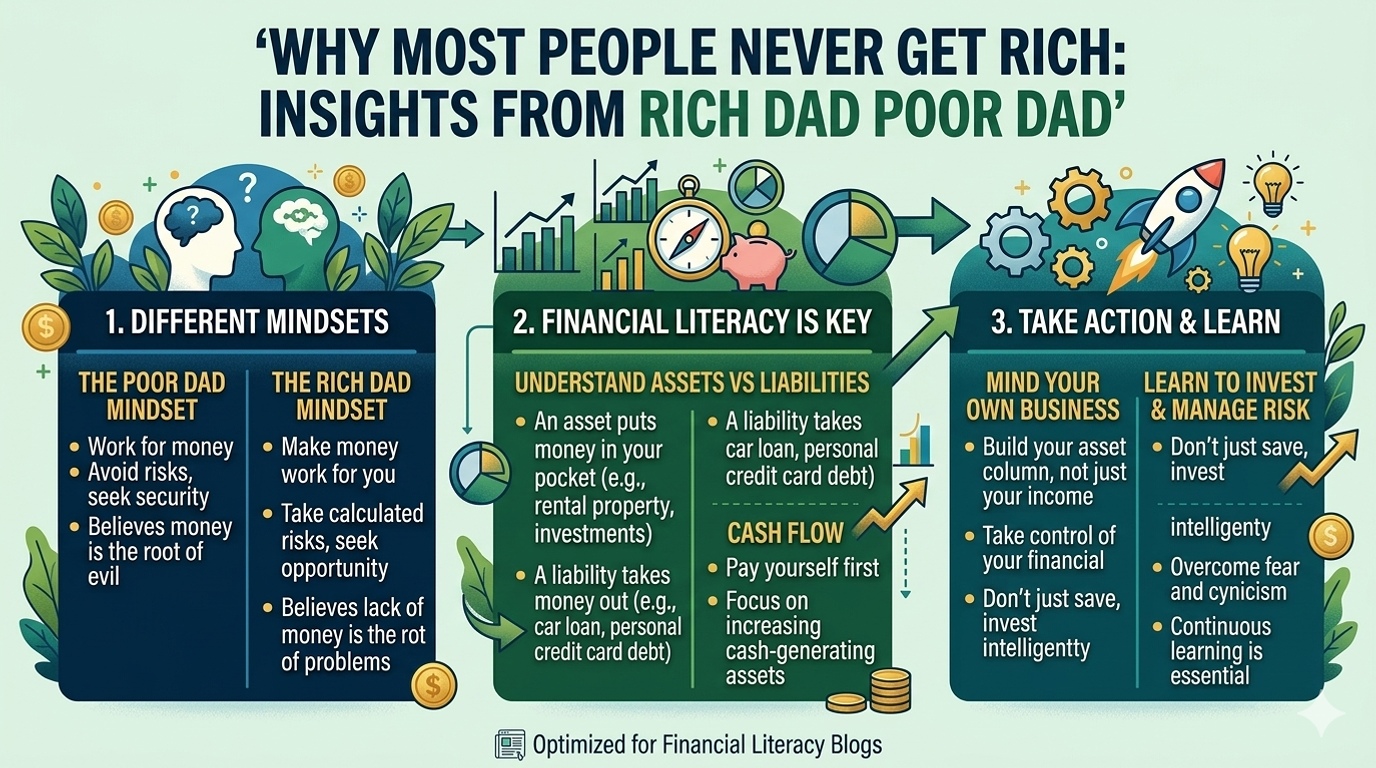
The book pitches a simple idea in a punchy way: there are two mindsets, two kinds of teachers, and two very different paths to money. One dad teaches you to trade time for money. The other teaches you to make money work for you. Reading that side by side, I finally understood why so many people drift into the rat race—without realizing it, they’re buying liabilities that look like assets. And yes, I’m talking about the fancy car they show off or the big-screen TV that drains a paycheck month after month.
Key Lessons I Didn’t See Before (In Real Talk)
- Assets vs. liabilities: build assets that put money in your pocket, not expenses that take it away.
- Cash flow is king: passive income beats a constant grind of overtime, when you can get there with smart choices.
- Financial education beats a high salary: you can compound wealth with knowledge, even on a modest income.
- Pay yourself first: save and invest before you spend on wants that won’t grow your net worth.
A Canadian Spin: From Snowy Streets to Smart Money Moves
Growing up in a small town just outside Toronto, I watched winters pile up and disappointment settle in when bills did not. The first real shift came on a chilly January day, after I started a part-time job at a local Tim Hortons. I wasn’t rolling in cash, but I learned a simple truth: every dollar saved could be steered toward something that earns more than it costs. So I stopped buying gadgets I didn’t need and started learning about investing, even if it was just a few pages a night. My friends joked about my “Canadian hustle”—not flashy, but stubborn and steady. That mindset, seeded by the book, helped me stop thinking money was something that happened to me and start thinking about what I could do with it.
And yes, it’s a little Canadian to admit that I still love maple syrup and a good hockey game while crunching numbers. The discipline from my winters and the patience I developed reading about assets slowly built a different habit: I started to see money as a tool, not a trophy. That shift matters. If you’re in Canada or anywhere else with costs and seasons that change how you live, that mindset is especially powerful.
Practical Steps to Start Your Wealth-Building Journey
- List your assets and liabilities. Then trim the liabilities and grow the assets, one small step at a time.
- Track every dollar for 30 days. You’ll spot leaks and spots you can fill with smarter choices.
- Turn a side hustle into passive income: build something that earns while you sleep, even if it’s small at first.
- Invest in learning before you buy fancy gear. Knowledge compounds faster than gadgets.
- Read with intention. Pair Rich Dad Poor Dad with a habit of weekly money reflection to keep yourself honest.
Borrowed Wisdom, Not Quick Fixes: A Book I Recommend
If you liked the mindset shift in Rich Dad Poor Dad, you’ll probably enjoy Atomic Habits by James Clear. It’s not about get-rich-quick tricks; it’s about tiny routines that compound into real outcomes. Start small, stay consistent, and you’ll be surprised how your finances and life begin to align.
Ready to Dive In?
If you’re ready to start changing how you think about money, you can download Rich Dad Poor Dad here. It’s the kind of read that sticks with you long after you close the cover. Rich Dad Poor Dad can be your first step toward a smarter money plan.
Pro tip: bookmark the page and set a small, repeatable goal for the week—like saving a little more or researching one new asset type. Consistency beats hype, every time.