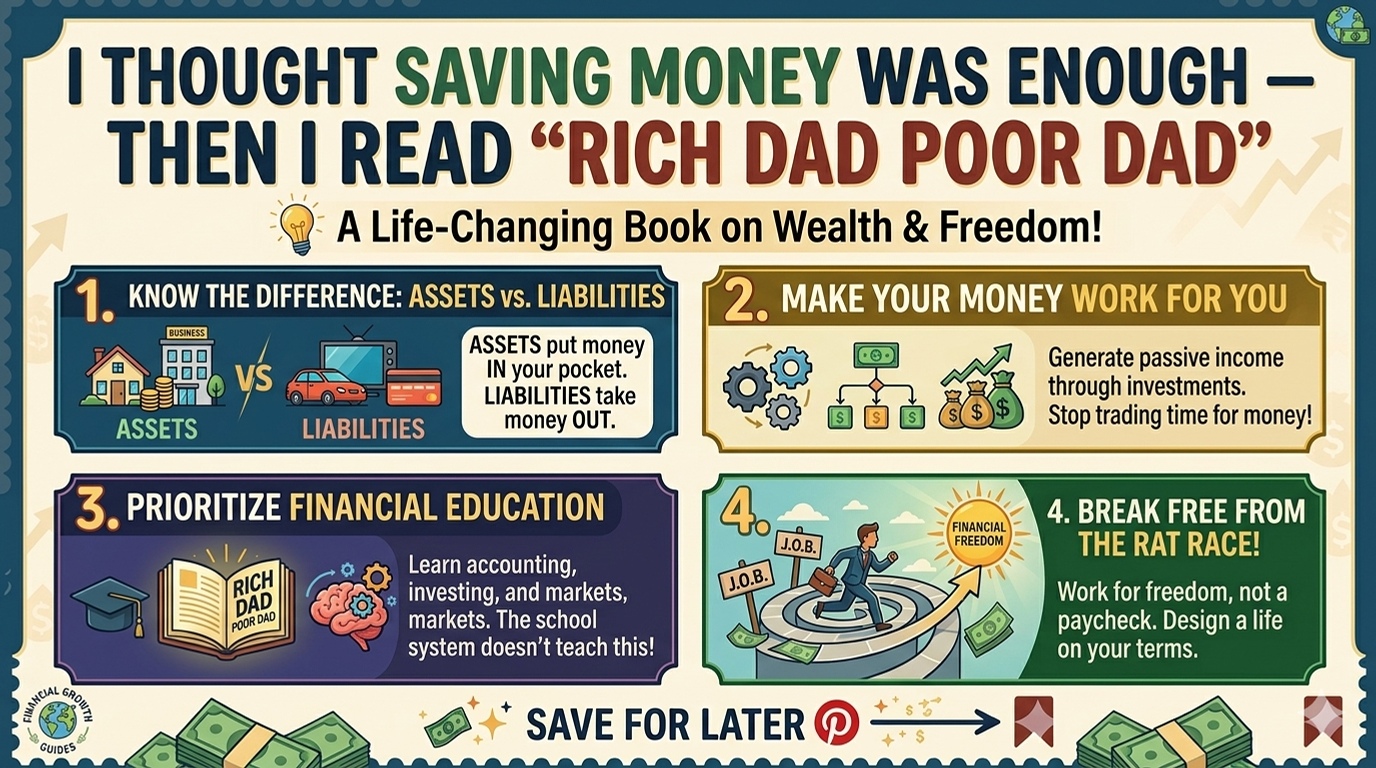
I Thought Saving Money Was Enough — Then I Read Rich Dad Poor Dad
I used to think that clipping coupons, clearing my credit card debt, and stashing a bit of cash under the mattress would magically set me up for life. Spoiler: it didn’t. Not really. Saving is important, sure. But money isn’t just about keeping what you have—it’s about growing what you have. That idea hit me like a Toronto subway doors closing—hard, a little awkward, and somehow necessary.
Why saving alone didn’t cut it
When I finally cracked open Rich Dad Poor Dad, I expected more pep talks about frugality. Instead, I found a shift in mindset. It wasn’t about how little I could spend; it was about how smart I could be with what I had. The book broke down a simple truth I’d overlooked: money is a tool, not a trophy. It’s supposed to work for you, not the other way around.
What I learned that stuck
- Assets over liabilities. I finally understood the difference between money that sits in a bank and money that earns more money.
- Cash flow matters more than a fat paycheck. A good job helps, but steady, growing income streams are what build security.
- Financial education is a habit. Reading the market, asking questions, and adjusting your plan beats blind saving every time.
To see the full, practical effect, I kept turning the pages during my Canadian mornings—before the kettle hissed, while the CBC radio spoke in the background, and a pot of timmies coffee steamed on the counter. Don’t get me wrong: I still love saving. I just learned there’s a smarter path to the life I want, and it starts with how I think about money—not just how I save it.
Three practical shifts I started today
- Track where every dollar goes for a month. Not just groceries, but snacks, coffee runs, transit, and those small luxuries.
- Switch from “save what’s left” to “save first.” Pay yourself before you pay the bills, even if it’s a tiny amount.
- Invest in learning, not just gadgets. A little education today compounds into bigger opportunities tomorrow.
A Canadian touchstone: money talk over hockey and Tim Hortons
My friends and I started nerding out about budgets the way we banter about the Leafs. We’d trade book highlights over a double-double, and somehow the numbers made more sense with a Maple Leaf on the mug. It wasn’t glamorous, but it felt doable. If you’re Canadian, you know this blend: a bit of snow, a lot of talk, and a plan that actually sticks because it fits our everyday lives.
Why this book, why now, and a gentle nudge to read more
If you’re new to money talk, this might be your gateway. It’s not one of those intimidating finance manuals. It’s a conversation you can have on your own terms—and then take real steps. I also found The Psychology of Money by Morgan Housel a great companion read for mindset and behavior around wealth. It helped me connect the dots between what I know and what I actually do with my money.
Ready to dive deeper? You can grab the book that sparked my change here: download Rich Dad Poor Dad and start building smarter money habits today.
Key takeaways in one quick glance
- Saving is essential, but it’s not the entire picture.
- Learning the difference between assets and liabilities changes how you spend and invest.
- Small, consistent actions beat big, sporadic efforts—especially when they grow your cash flow.
If you’re curious about more reading, I’d suggest starting with Rich Dad Poor Dad and then picking up The Psychology of Money for a broader view on how we think about wealth. Both helped me rethink what it means to be financially healthy, in a way that fits real life, not just big dreams.
Happy reading, friend. May your budget grow roots and your curiosity keep blooming.