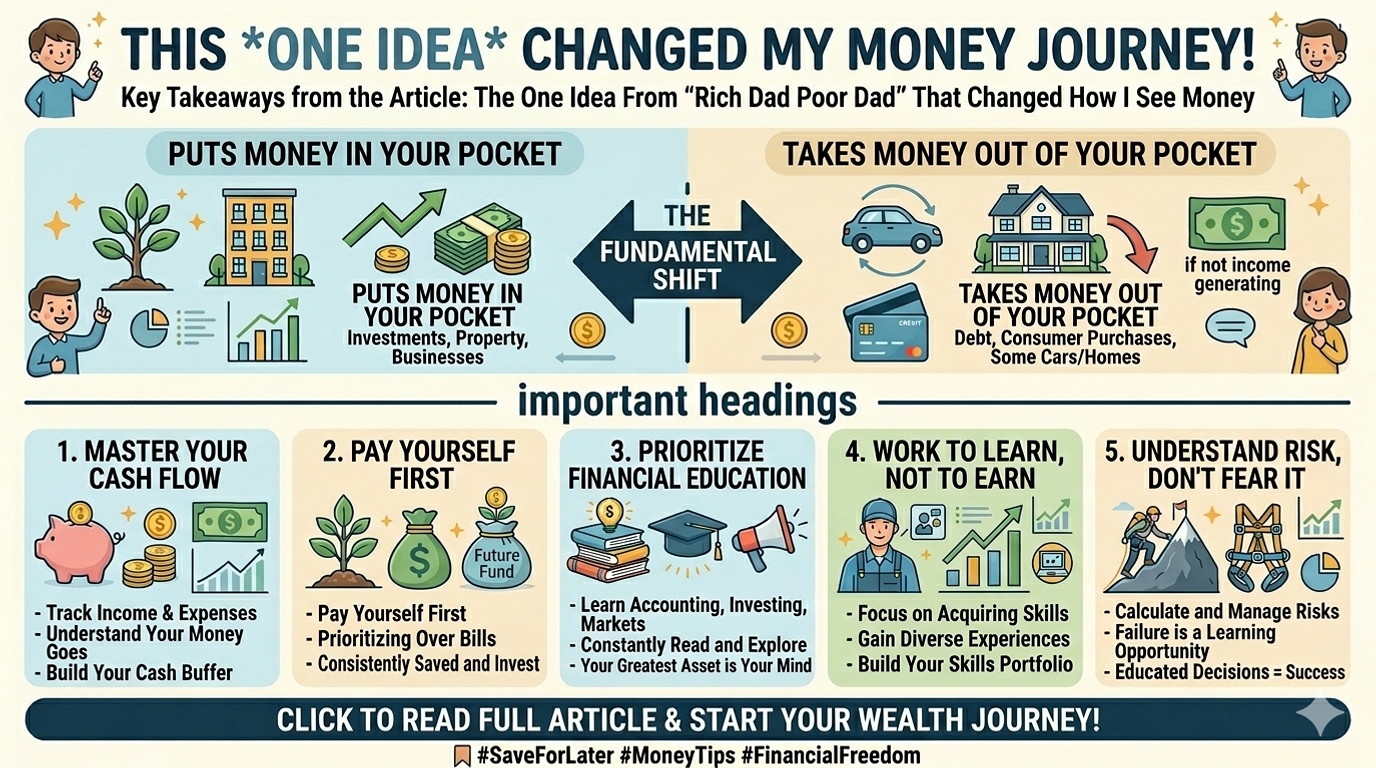
The One Idea From Rich Dad Poor Dad That Changed How I See Money
When I first read Rich Dad Poor Dad, I expected a magic trick. Instead, I got a mirror. The author doesn’t promise a shortcut; he hands you a framework. The line that stuck with me is simple: some things make you money, some cost you money. That distinction changed everything.
I'm a regular person from a small Canadian town who loves Tim Hortons and weekend hockey, not a Wall Street whiz. Yet the idea landed with a crunch. I started asking: Do I own assets that pay me, or liabilities that drain my cash?
Assets vs Liabilities: The tiny mental flip that saved my budget
Here's how I think about it now: a true asset puts money in my pocket. A liability takes money out. A new SUV? Liabilities. An investment rental? Asset. It sounds obvious, but the realization hit like a puck to the shin guard. I reorganized my finances with this lens, and the numbers began to tell a story.
My memory of a Canadian moment that ties it all together
It was a cold Saturday in Kingston. I convinced my friends to split the cost of a small, fixer-upper condo near Queen's University. The listing looked rough, but the math added up. We bought a property that needed work, turned it into a rental, and watched the mortgage shrink month by month. That decision, rooted in the asset mindset, changed how I approach money in a country where the winter feels like a long negotiation with yourself.
Three practical takeaways I actually use
- Start small: find a side project that creates a steady cash flow, even if it’s modest.
- Reinvest profits: compound growth beats big leaps by design.
- Track assets vs liabilities weekly: awareness beats wishful thinking.
A simple plan to begin building your own assets
Step 1: List every monthly expense. Step 2: Separate into assets and liabilities. Step 3: Pick one affordable asset you can start this month—an online course that teaches you a marketable skill, a peer-to-peer investment, or a small rental. Step 4: Set a 90‑day goal and track progress. It’s not glamorous, but it’s sustainable. You’ll start to see money move differently when your focus shifts from “how much I earn” to “how much I keep and grow.”
Want the full mindset reboot? A quick link to the original book
If you’re curious to dive deeper, you can grab the ebook version of Rich Dad Poor Dad here: Rich Dad Poor Dad. It’s not a sales pitch; it’s a blueprint you can adapt to life in Canada and beyond.
A single book recommendation that still helps me today
Besides Rich Dad Poor Dad, I love The Psychology of Money by Morgan Housel. It’s short, readable, and full of aha moments about how we think — and sometimes sabotage — our own dollars. If you enjoy practical wisdom and real-life stories, this one fits nicely on any shelf, including a cozy coffee break between rounds of hockey.
Want to keep this momentum? Here are some trending keywords to explore in your own search: wealth-building, passive income, financial education, budgeting, cash flow, assets vs liabilities, financial freedom, money mindset, side hustle, Canadian finance tips, early retirement planning.