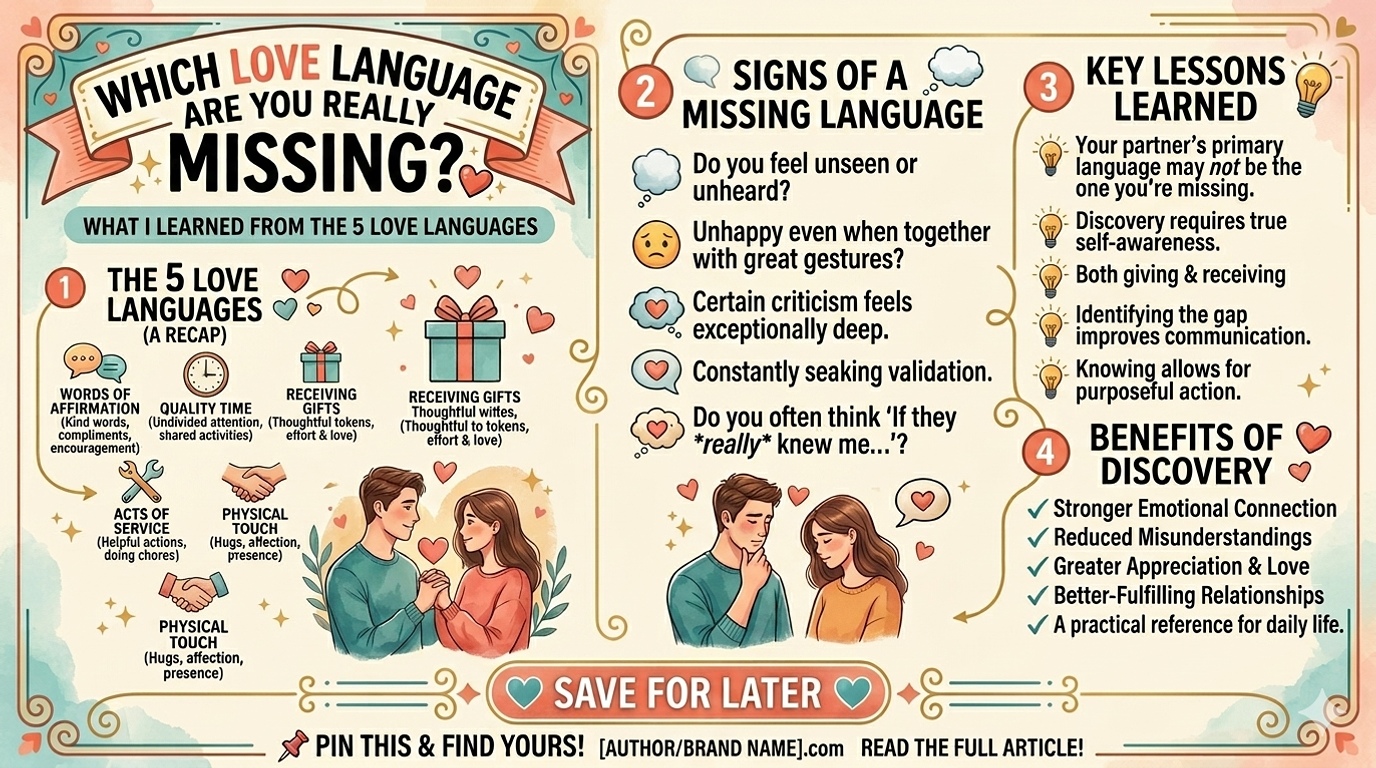
Which Love Language Are You Really Missing? What I Learned from The 5 Love Languages
I used to breeze through relationships like they were a quick text exchange—efficient, practical, and mostly about getting my own point across. Then I picked up The 5 Love Languages, and something clicked. It wasn’t a magic fix, but it gave me a map for the emotional terrain I’d been wandering. I’m still learning, but I’m also a little bolder about expressing care now. The difference isn’t loud; it’s steady, like a favorite playlist that fits just right.
To ground this in real life, here’s a tiny Canadian snapshot. Picture a Saturday in Toronto: wind skating along Lake Ontario, a line at Tim Hortons, and me balancing a bag of groceries, a coffee, and a plan to fix the thing that irritated me most—communication. I realized I spoke a lot of Words of Affirmation in my own head, while my partner needed something else entirely. That moment wasn’t dramatic; it was a nudge from everyday life telling me to listen harder.
The Five Love Languages, Explained Simply
- Words of Affirmation — verbal notes, compliments, and kind, encouraging words.
- Acts of Service — doing something thoughtful or helpful to lighten a load.
- Receiving Gifts — thoughtful tokens that show you were thinking of me.
- Quality Time — focused attention, shared activities, and undivided presence.
- Physical Touch — hugs, holding hands, comforting closeness.
When I read, I found my own language wasn’t just one thing. It’s a mix, and often it shifts with mood, stress, or how close I feel to someone. The real note? Your partner’s language matters as much as yours. If you don’t know it yet, you’re not failing—you're missing a bridge that could carry love across the room, or across time zones.
Which Language Am I Really Missing?
For me, the big clue wasn’t which language I preferred. It was noticing the gaps when the lights were on and the cameras were off. I’d say, “I’m fine,” and the other person would feel unseen. That was my cue: I wasn’t just missing a language. I was missing the chance to translate what I felt into something the other person could feel, too.
My quick takeaway: pay attention to what your partner does when you show up in small ways, not just big declarations. If they brighten at a thoughtful text, but sigh when you rush through chores together, maybe Acts of Service or Quality Time is the missing link. If you crave physical closeness after a tough day, Physical Touch might be your language. You don’t have to choose one for life; you can learn to speak multiple ones—even if you’re busy, tired, or overwhelmed.
How to Find and Fill Your Missing Language (Without Guesswork)
- Take a quick, honest inventory of what makes you feel seen and cared for.
- Watch how your nearest people respond to different kinds of care—notice what lights them up.
- Try one new language each day for a week—simple acts, gentle words, a shared moment.
- Ask open questions. “What makes you feel most loved this week?” is a tiny doorway to big change.
A Light Reading List for Growth
Besides the classic The 5 Love Languages, I’ve been circling Atomic Habits by James Clear for practical, everyday change. It’s the kind of book that fits into a busy life, offering doable steps rather than lofty promises.
Want to Dive Deeper? Grab the Ebook
If you’re curious to explore the full framework, quizzes, and real-life examples, you can download the ebook here:
Download The 5 Love Languages ebook.
Quick Canadian Touch
Funny how small cultural moments matter. In Canada, we’re big on sincerity and staying connected even when life gets hectic. A five-minute chat over a warm drink can feel like a tiny rescue mission for a relationship. That vibe—steady, honest, a little bit cozy—is exactly what these love-language shifts are about.
So, here’s to discovering your missing language, one day at a time. If you’re open to it, your next conversation could become easier, kinder, and a touch more you.