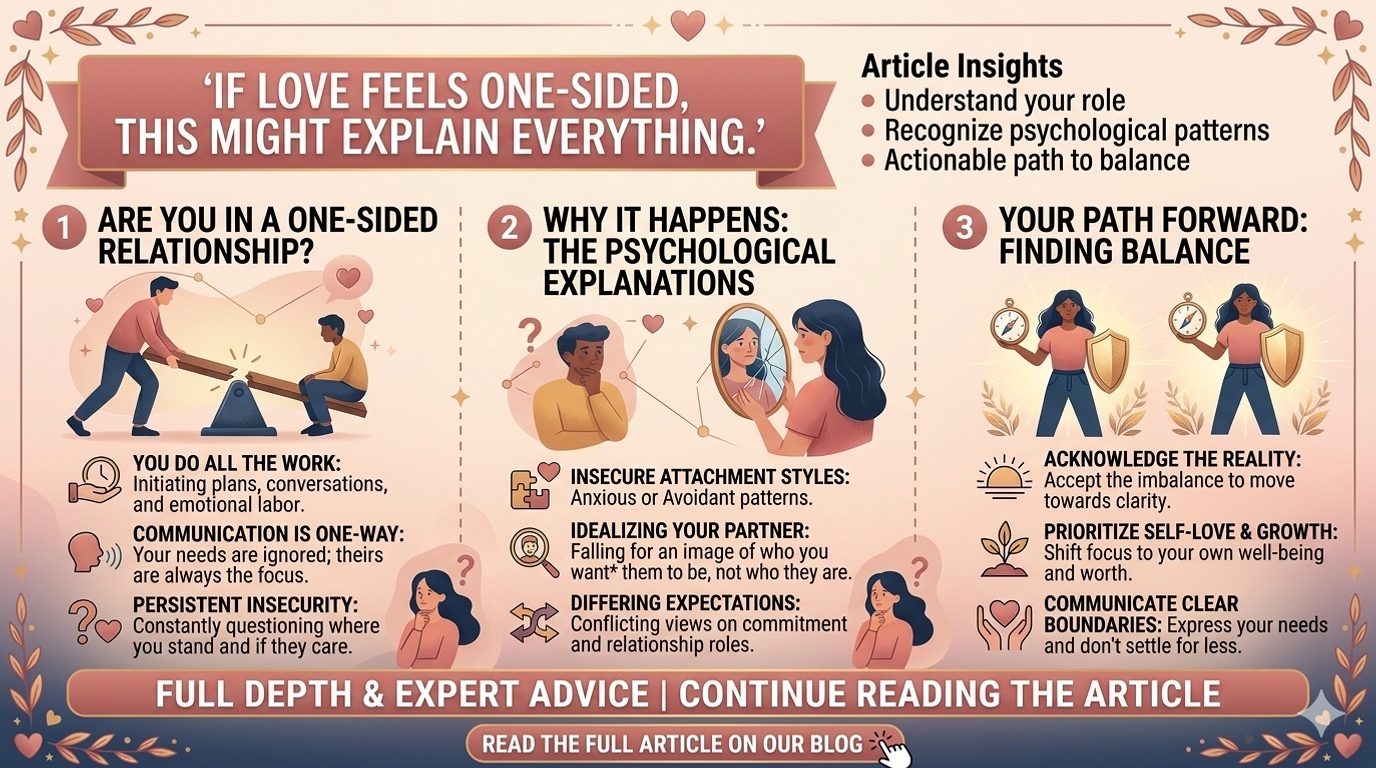
I'm learning that when love starts to feel one-sided, it's rarely about you being unlovable. It often points to something deeper happening under the surface. In my own messy dating journey around the city that never sleeps, and yes, in a quiet Toronto kitchen sipping drip coffee, I've come to see patterns that repeat themselves. If you're listening to the same song on loop—one person care, the other person going through the motions—there might be a code to crack. Here's what I've learned and what might explain everything.
Signs to watch for when love feels one-sided
- You're the one texting and planning most of the moments.
- The other person seems distant, even when you’re together.
- Your feelings grow while theirs stay flat or vague.
- Your gut keeps whispering that you’re chasing rather than connecting.
What’s really happening underneath the surface
I wasn’t ready to admit it at first. But sometimes love feels one-sided because one partner isn’t emotionally available. That doesn’t mean you’re broken or not enough. It means your relationship might be stuck at a familiar stage—the stage where one person gives, and the other mirrors just enough to keep things afloat.
- Attachment style matters. If you’re anxious, you might crave more closeness; if they’re avoidant, they pull away just when you lean in.
- Communication gaps: you say, “I’d love more affection,” they hear, “I guess I’m fine with less.”
- Love languages matter: if your primary love language differs, it’s easy to feel unseen.
Canadian vibe, real talk: a relatable moment
Picture this: a chilly Sunday in Montreal, people sipping hot cocoa in a cafe with a view of the old port. We start a quiet chat about feelings, and the talk veers toward silence. In those moments, the truth shows up in small ways—like a shrugged shoulder, or a delayed reply. You’re not alone. It’s not about drama; it’s about alignment. We want to feel seen, heard, and valued—without turning every moment into a performance for the other person. And yes, your dating apps will reflect the same patterns—taunting you with potential, while real connection feels stubbornly slow. You’re looking for a genuine spark, and that’s totally understandable.
Simple steps to get unstuck (without losing yourself)
- Name what you need. Be specific: “I need more weekly check-ins.”
- Check your own boundaries first. If you’re exhausted, your energy will spiral into frustration.
- Have an honest, calm conversation. Don’t attack; reflect and invite feedback.
- Consider love languages as a practical tool. If you’re curious about how love works, this resource may help (link below).
Try this tiny experiment
I started a week-long journal where I recorded three things: what I gave, what I received, and how I felt after each interaction. The results surprised me. It wasn’t about blame; it was about noticing patterns. If you do this, you’ll likely spot dead-ends early and pivot toward healthier relationship dynamics.
A trusted read that helps shape understanding
If you want a clear, practical framework, I recommend a book that genuinely changed how I talk about love. It’s called "The 5 Love Languages." It isn’t just about pretty words; it’s about learning to translate someone else’s needs into actions you can actually show up with. You can grab the ebook here: The 5 Love Languages.
Two more ideas to keep you moving forward
- Practice self-compassion. You deserve reciprocity, not a constant uphill sprint.
- Remember: love is a skill you learn, not a trait you either have or don’t.
On days when the weather matches your mood—glum and overcast—remember: growth rarely happens in a straight line. It happens with patience, honest talk, and a little bit of courage. And yes, a good Canadian coffee break always helps reset the heart.