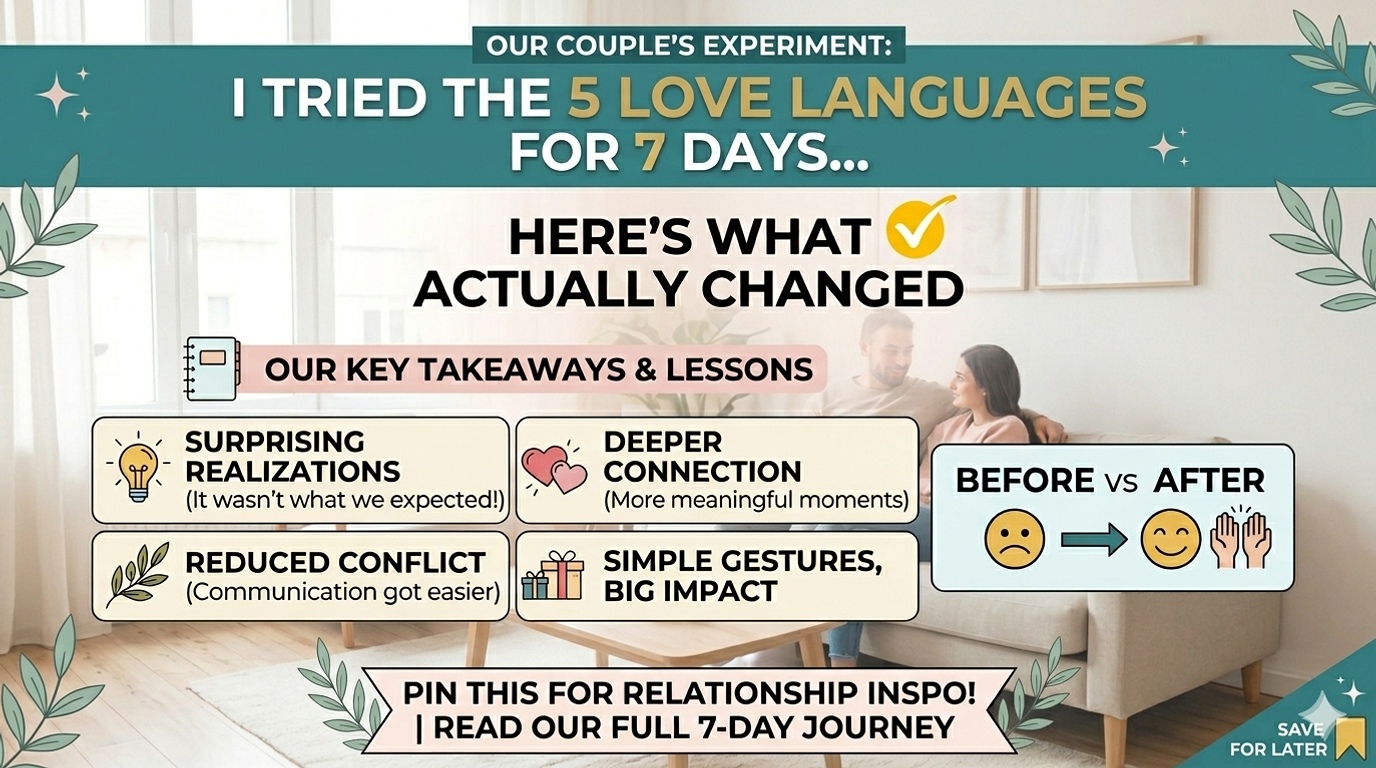
When I first heard about the 5 Love Languages, I figured it was a cute quiz. I was wrong in the best possible way. I decided to test them for 7 days and track what actually changed in my relationship, in my mood, and in the way I show up for people I care about. I even brewed a Tim Hortons coffee and jotted notes as a Canadian winter hummed outside. I'm sharing my honest, unpolished experience—the small wins, the awkward moments, and the surprising clarity that came from trying to speak love in different ways.
My 7-Day Experiment with the 5 Love Languages
I did a little experiment at home in Canada, where winter can feel long, and coffee can feel essential. I spent a week focusing on one language at a time—then mixing them. Spoiler: it wasn’t about becoming a "master" of love. It was about noticing more kindness and communication in the everyday.
- Day 1 — Words of Affirmation: I wrote a short, specific compliment for my partner and left a sticky note on the fridge. The response? A warmer vibe all day, like a light switch got flipped.
- Day 2 — Acts of Service: I did the dishes, stood up from my chair a little quicker, cooked dinner. It wasn’t grand, but it said, “I see you.”
- Day 3 — Receiving Gifts: A tiny, thoughtful token—her favorite tea, a small plant. The moment of surprise was more about feeling seen than the value of the gift.
- Day 4 — Quality Time: We turned off notifications, had a real conversation, and walked to the park. After, we curled up to watch a Maple Leafs game. It reminded us that together time doesn’t have to be fancy to be meaningful.
- Day 5 — Physical Touch: A longer hug, a hand on the shoulder, a gentle kiss goodnight. It reminded us that touch can reset a tense moment without words.
- Day 6 — Blending Languages: I mixed words, acts, and timing. I learned what she craved most in that moment—was it praise, help with chores, or a quiet moment together?
- Day 7 — Reflection: I asked, “What actually changed?” Our conversations felt softer, our patience longer, and our little annoyances shrank a bit.
What Changed (Beyond the Warm Fuzzies)
Truth be told, the changes weren’t fireworks. They were small, steady shifts. More laughter. Less sarcasm when I’m tired. A sense that we’re on the same team, not across a field of misunderstanding. The same patterns came up—some days a language lands better than others—but the overall vibe shifted toward cooperation, curiosity, and more honest check-ins. And yes, I found I’m more mindful in daily routines, not just big declarations on social media. That’s the real win.
Practical Takeaways for Beginners
- Start small. You don’t need to master all five languages at once. Pick one or two to test this week.
- Be concrete. Specific words, acts, or times beat vague intentions every time.
- Watch for balance. Too much of one language can feel performative or hollow.
- Ask for feedback. A quick “Did that land well?” goes a long way.
- Keep it consistent. Small, regular efforts win over dramatic, sporadic acts.
Want the Full Method? Download the Book
If you want to dive deeper and have a practical, step-by-step approach, grab The 5 Love Languages: The Secret to Love That Lasts. It’s a straightforward guide that complements this experiment nicely. You can download it here: The 5 Love Languages: The Secret to Love That Lasts.
A Quick Book Recommendation
While this was a personal experiment, I also enjoyed “Attached” by Amir Levine and Rachel Heller. It complements the love language idea by exploring attachment styles and how they shape how we show love—and how we interpret it from others.
Final Thoughts: You Can Start Today
Honestly, if you’re curious about what makes connection feel easier, give the 5 Love Languages a try for a week. It’s not about perfection; it’s about noticing what matters to the people you care about. And if you’re a fellow Canadian, you’ll appreciate the little rituals that make life feel warmer in the cold months—a hot mug, a comforting routine, and a friend who sticks around when the wind howls outside.