How to Design Your Environment for Success (A Practical Guide to Frictionless Habits)
We all want to build better habits, but willpower alone rarely does the trick. The good news: your surroundings can do a lot of the heavy lifting. By designing your space for success, you create frictionless habits that stick—without needing heroic effort.
Why your environment matters
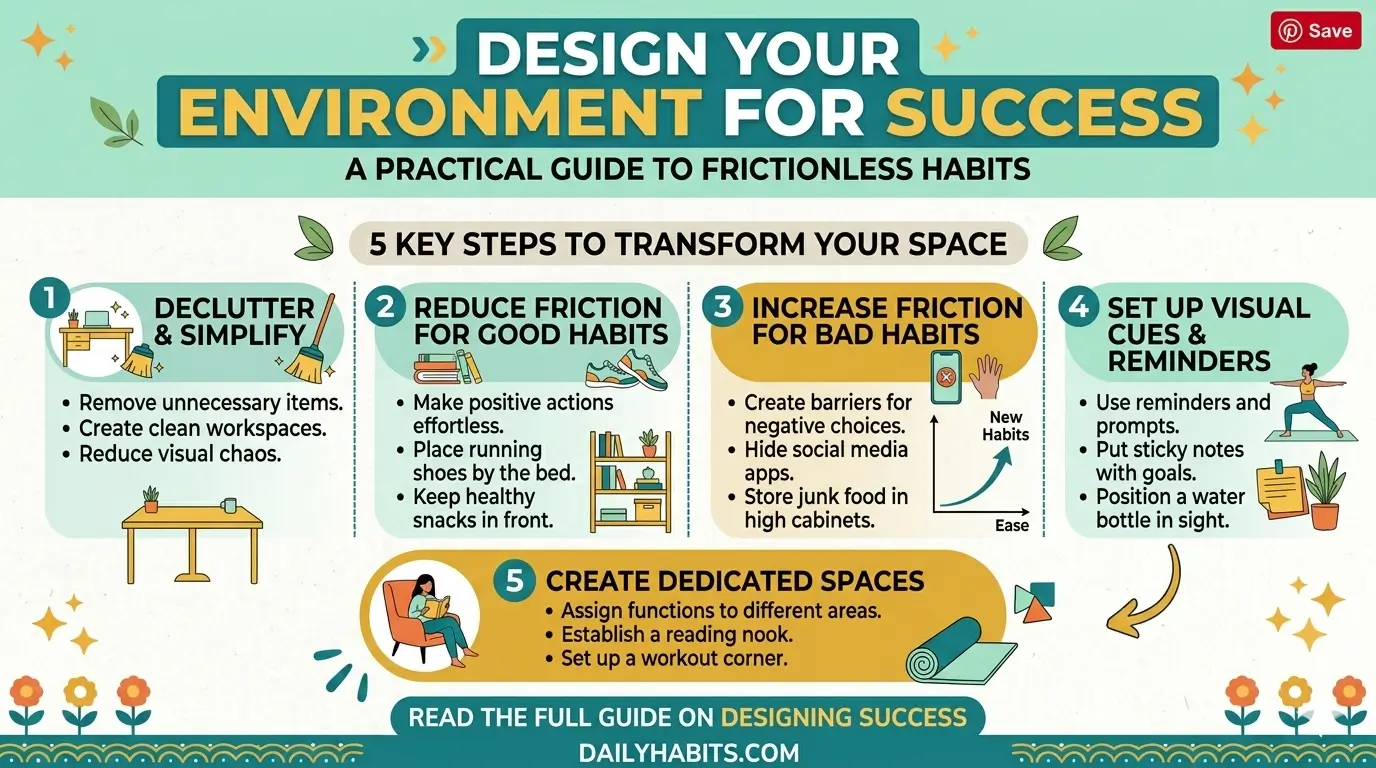
Your brain loves routines and cues. A tidy desk, a ready-to-go meal setup, or a focused digital workspace reduces decision fatigue and nudges you toward action. In short: design your environment to cue the behavior you want, and your success rate goes up.
Five quick wins to get started
- Put the habit cue in sight: place the action you want to repeat in a visible, reachable spot.
- Remove friction: eliminate or move distractors that derail your routine.
- Bundle related tasks: stack actions that naturally go together (habit stacking).
- Make it easy to start: break big tasks into tiny, 2-minute steps.
- Track progress visibly: a quick checkbox or streak counter reinforces consistency.
A practical 5-step design plan
- Clarify your habit goal: what exact behavior do you want to begin and maintain?
- Audit your space: list barriers and boosters in your physical and digital environments.
- Rearrange for success: relocate the necessary tools, and remove the temptations.
- Create cues and rewards: design tiny prompts and quick wins that feel rewarding.
- Review weekly: adjust the setting as your routines evolve.
Environment tweaks for different spaces
At home
Set up a dedicated zone for your top habit. Use clear containers, labeled shelves, and a single-goal setup (one habit per zone is fine). The goal is a calm, predictable space that minimizes decision fatigue.
In the kitchen
Pre-portion snacks, keep healthy options visible, and place your water bottle on the counter. Small changes here pay off in energy and consistency all day.
In your digital life
Organize your desktop, limit notifications, and create a dedicated time block for deep work. A clean digital workspace reduces friction and boosts focus, productivity, and time management.
Make it a habit to review and adapt
Habits live where you live. Schedule a weekly 15-minute review to tweak your environment, adjust cues, and celebrate small wins. Consistency compounds over time and turns friction into flow.
Examples of frictionless habit designs
- Morning routine: a glass of water by the bed, 2-minute stretch, and a quick plan for the day.
- Focused work: a clean desktop, only two essential apps open, and a timer set for 25 minutes.
- Hydration habit: a reusable bottle within arm’s reach and a scheduled reminder every hour.
Recommended read for deeper guidance
If you want a reliable, science-backed approach to habit formation, I recommend a classic that many readers love for practical routines and clear steps. Atomic Habits is a great next step, and you can download the ebook here.
Want a simple, beginner-friendly framework you can start today? Try these ideas and watch your environment support your success in real time.
.webp)