PMI-ACP vs. PMP in 2026: Which Certification is Better for You?
If you’re eyeing a career in project management, you’ve probably heard about PMI-ACP and PMP. In 2026, the question still stands: which path fits your goals, your industry, and your daily work better? This guide breaks down the basics in a friendly, beginner-friendly way, so you can decide with confidence.
What is PMP (Project Management Professional)?
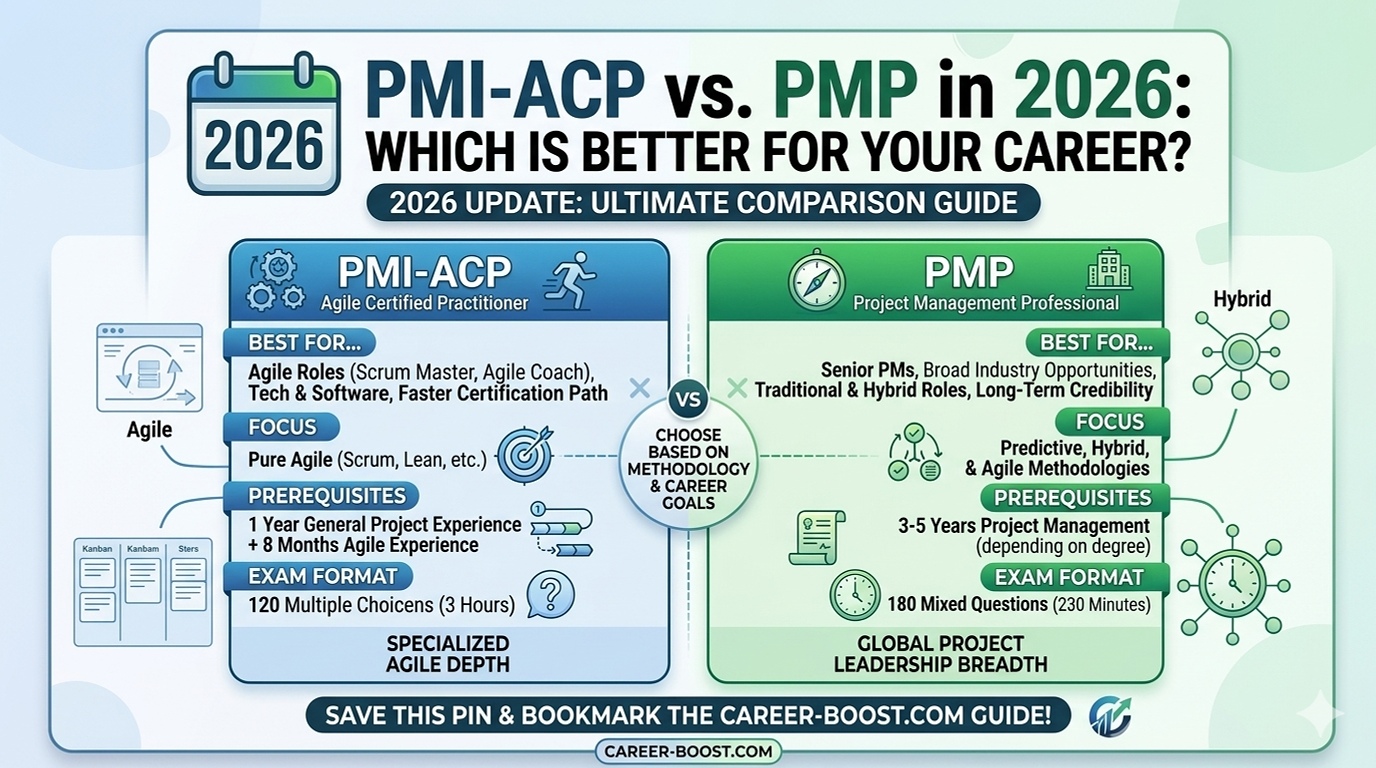
The PMP credential is the gold standard for traditional project management. It verifies your ability to lead and direct projects using widely accepted methodologies, tools, and techniques. If your work follows a more structured, waterfall-style approach or you manage large, cross-functional initiatives, PMP can be a strong fit.
What is PMI-ACP (Agile Certified Practitioner)?
PMI-ACP focuses on agile project management and practices. It covers agile principles, frameworks like Scrum, Kanban, Lean, and more, and is ideal if your team emphasizes iterative delivery, rapid adaptation, and customer collaboration. If you work in fast-paced environments or industries embracing Agile, PMI-ACP often aligns with daily realities.
Key differences at a glance
: PMP usually uses scenario-based questions across knowledge areas; PMI-ACP emphasizes agile concepts and practice across domains. : PMP often opens doors in traditional industries like construction, engineering, and IT programs; PMI-ACP helps in software, product development, and teams adopting Agile.
Which one should you pick in 2026?
Think about your current role and where you want to go. If you see yourself leading large, structured projects or you work in regulated industries, PMP is a solid bet. If you’re excited about agile delivery, cross-functional teams, and continuous improvement, PMI-ACP can accelerate your path. Consider your industry trends too—many sectors are leaning into Agile and hybrid approaches, so both credentials can be valuable depending on the context.
Cost, prep time, and exam formats
Both certifications require time, money, and commitment, but they serve different journeys. In general:
- Prep time: PMP often requires longer study hours due to breadth; PMI-ACP can be faster if you’re already comfortable with agile concepts.
- Costs: exam fees and study materials vary by region and PMI member status. Expect a few hundred dollars for the exam, plus study resources.
- Exam format: PMP tends to feature scenario-based questions across PMBOK knowledge areas; PMI-ACP emphasizes agile domains and practical application.
- Renewal: both require PDUs or credits to maintain validity, so plan for ongoing education.
Want a solid head start on PMI-ACP prep? I recommend grabbing a focused study resource. For a structured, beginner-friendly review, check out this PMI-ACP Exam Prep eBook:
A natural book recommendation for 1 book
If you’re building a reading list alongside your certification journey, a timeless and practical pick is Agile Project Management with Scrum by Ken Schwaber. It’s approachable for beginners and pairs nicely with PMI-ACP study material, offering real-world insights into delivering value with Agile.
Tips to study smarter
- Set a realistic study plan and stick to it for 8–12 weeks (adjust to your schedule).
- Use practice exams to identify weak areas and track progress.
- Join a study group or online forum to stay motivated and get new perspectives.
- Balance theory with hands-on practice—try small Agile projects or simulations at work.
Final thoughts
Both PMI-ACP and PMP have their merits, and the best choice in 2026 depends on your goals, industry, and preferred working style. If you’re unsure, consider starting with an assessment of your current role, talk to mentors, and explore one foundational course or workshop in Agile or traditional PM concepts. Remember, whichever path you choose, continuous learning and practical application will drive the most value in your career.
Ready to dive deeper? The PMI-ACP Exam Prep eBook linked above is a convenient way to jump-start your study plan and stay on track as you prepare for the exam.