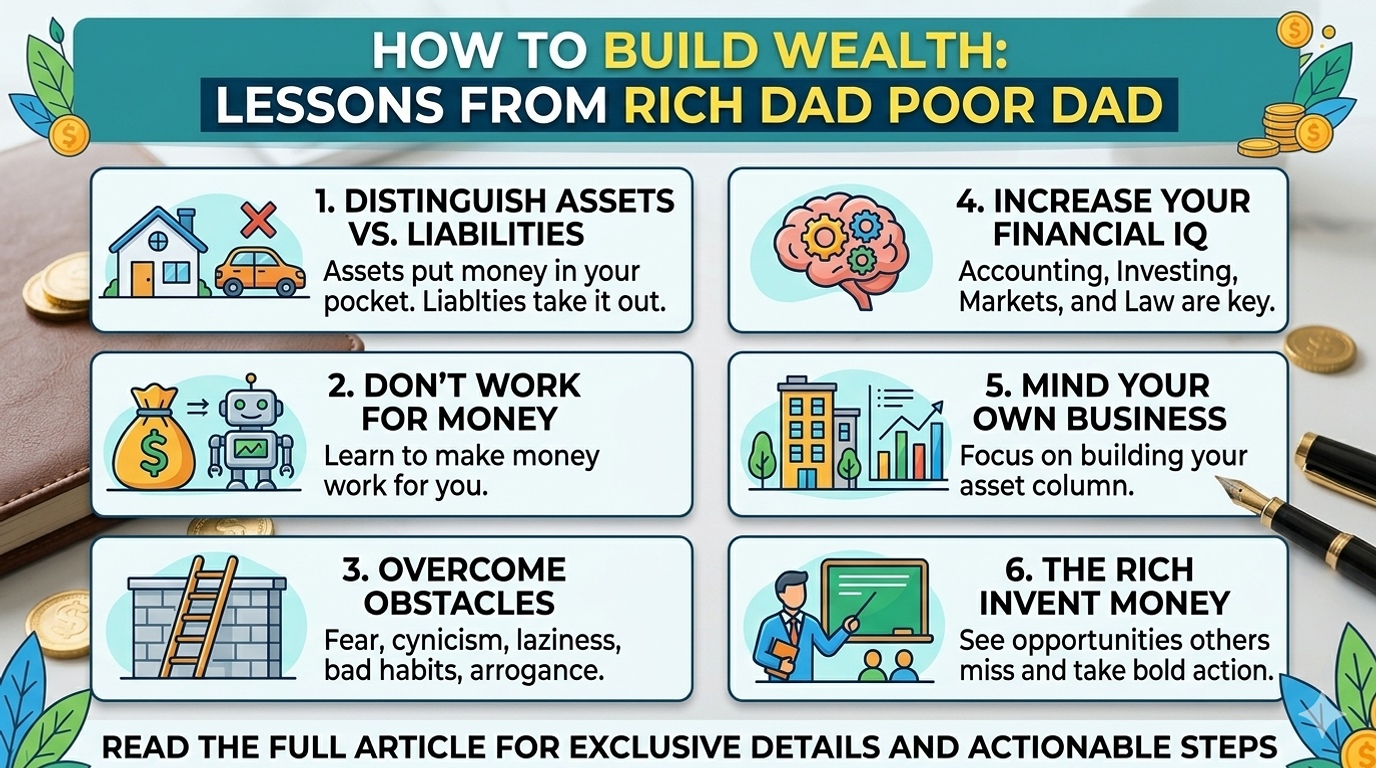
When I first skimmed Rich Dad Poor Dad, I thought wealth was about the occasional windfall, not daily choices. I was wrong. The book showed me money works best when you change how you think about it. I started small, with big questions, and I kept at it. I remember a snowy Sunday in a Toronto suburb—shoveling the sidewalk, counting spare coins, and realizing I needed a plan. Here are the lessons that stuck and how you can apply them, too.
Shift Your Mindset: Assets, Not Wallets
The first big pivot was changing how I define wealth. It isn’t how much you make; it’s how much you keep and grow. I asked myself: do I own something that puts money in my pocket, or do I own stuff that costs me money every month?
- Make a simple assets vs liabilities list and be honest with yourself
- Choose a few cash-flowing assets to begin—like a small side project, a rental, or a low-cost fund
- Trim the liabilities that drain money without delivering value
Pay Yourself First: Automate Your Wealth-Building
I learned to treat savings as a bill I owed myself. In Canada, folks often save for a cottage or reliable car, but the real game is paying your future self first. I set up automatic transfers to a savings or investment account every payday. Do it before you even see the money.
- Set up automatic transfers to a TFSA or an investment account
- Automate debt payments to shrink interest faster
- Use a simple monthly budget that you actually stick to
Educate Yourself: Knowledge Is Your Best Asset
I devoured podcasts, books, and quick challenges that taught me about money. You don’t need a fancy degree—just a curious, willing mind. The Canadian market has quirks, but the core idea is universal: time plus learning equals compounding wealth.
- Learn basic investing concepts like compounding and diversification
- Start small—even $50 or $100 can get you moving
- Prefer low-cost, diversified options over flashy bets
For a foundational perspective, Rich Dad Poor Dad opened my eyes to assets and cash flow. If you haven’t read it yet, you can grab it here: Rich Dad Poor Dad.
Action Plan: A Simple 3-Step Start
Here’s a quick 90-day blueprint that won’t overwhelm you.
- Day 1–15: List all assets and all debts; note cash flow
- Day 16–45: Pick one asset to start with—a course, a tool, or a tiny investment
- Day 46–90: Automate savings, begin a side project, and review monthly progress
Two Quick Wins for Momentum
Win 1: Stop treating money you don’t have as security. Win 2: Start small, stay consistent, and let time do the heavy lifting. Those two wins compound into real confidence—and real dollars.
If you’re hungry for more practical guidance beyond the book I mentioned, I also enjoy The Simple Path to Wealth by JL Collins. It’s clear, calm, and perfect for beginners who want a straightforward plan.
Ready for a deeper dive? That Rich Dad Poor Dad link above is a solid place to start. It sparked this whole journey for me, and I believe it can do the same for you.