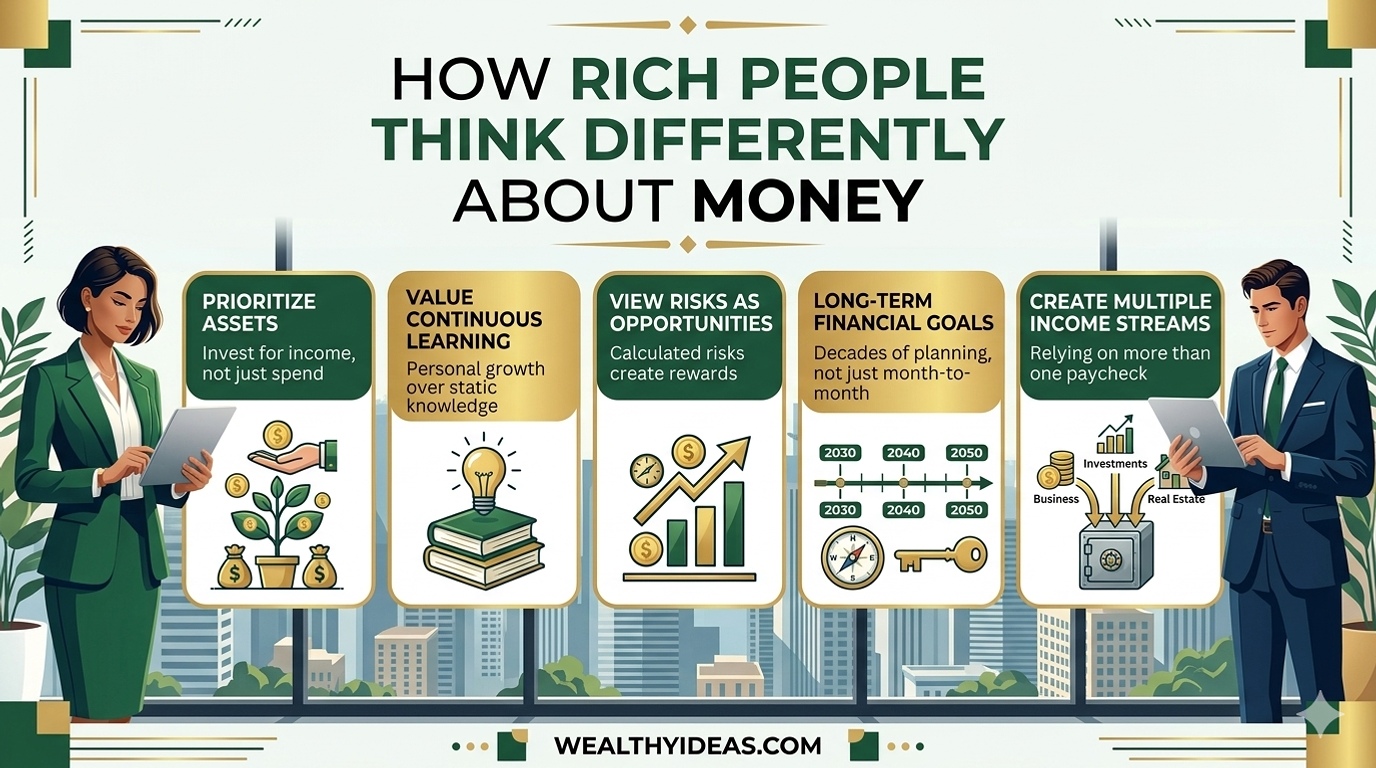
How Rich People Think Differently About Money
I'm often asked how money works on the other side of the fence. The truth is some people view money with a different set of rules. It's not about how much you make, it's about how you think. Here’s how I started noticing the differences, and how you can adopt them too—with a friendly, beginner-friendly vibe.
Money is a Tool, Not a Prize
Rich people see money as a tool to buy time, options, and opportunities. I’m still figuring this out, and I’ve had my fair share of shiny-object moments. Don’t beat yourself up; the shift starts with a simple question: what will this buy me in five years?
- Focus on cash flow over bragging rights
- Invest in assets that produce income
- Limit debt that doesn’t generate value
The Power of Passive Income
I'm not pretending it’s magic. Passive income takes discipline. I started with tiny, steady bets—dividends, a rental, a side hustle that scales. Don’t wait for perfect timing. Start where you are.
- Build streams you can audit, not just dream about
- Automate what you can, so money works while you sleep
- Reinvest your gains to accelerate growth
Money Mindset: The Talk in Your Head
My inner voice used to whisper worry. Rich people train theirs to ask better questions. Instead of "I can't afford that," I say, "How can I make it affordable or unnecessary?" It sounds small, but it’s a big lever for change.
Start Small, Grow Big
You don’t need a king’s fortune to begin. I started with small bets—watching my budget, saving a little, and testing an easy investment. The habit compounds, and confidence follows.
A Canadian Twist: Everyday Thrift
Growing up in Canada, I learned thrift from hockey practices and Tim Hortons runs. We use the winter months to plan, not to impulse-buy. Skipping a pricey latte, choosing a cheaper grocery brand, or splitting a bill with friends—these tiny choices add up. If you’re in Toronto, Montreal, Calgary, or a small town, you know these small wins matter when the weather keeps you indoors for weeks.
For a practical model, I lean on a book that helps decode money conversations and mindsets. download Rich Dad Poor Dad to see the ideas in action and start reframing your own money story today.
Quick-start Checklist
- Track every dollar for a month to reveal real spending habits
- Identify one asset that can generate income
- Set a tiny automatic transfer to savings or investments
- Read a short chapter daily—small bursts, big changes
Book Recommendation You’ll Enjoy
Besides the wealth-building classic, I recommend Atomic Habits by James Clear. It’s a practical, readable guide on tiny changes that compound into real outcomes. If you want a friendly boost to habits that help money grow, this book pairs nicely with the money mindset lessons above.
If you’re curious for more, I share notes and prompts that help you build momentum—no fluff, just steady progress.