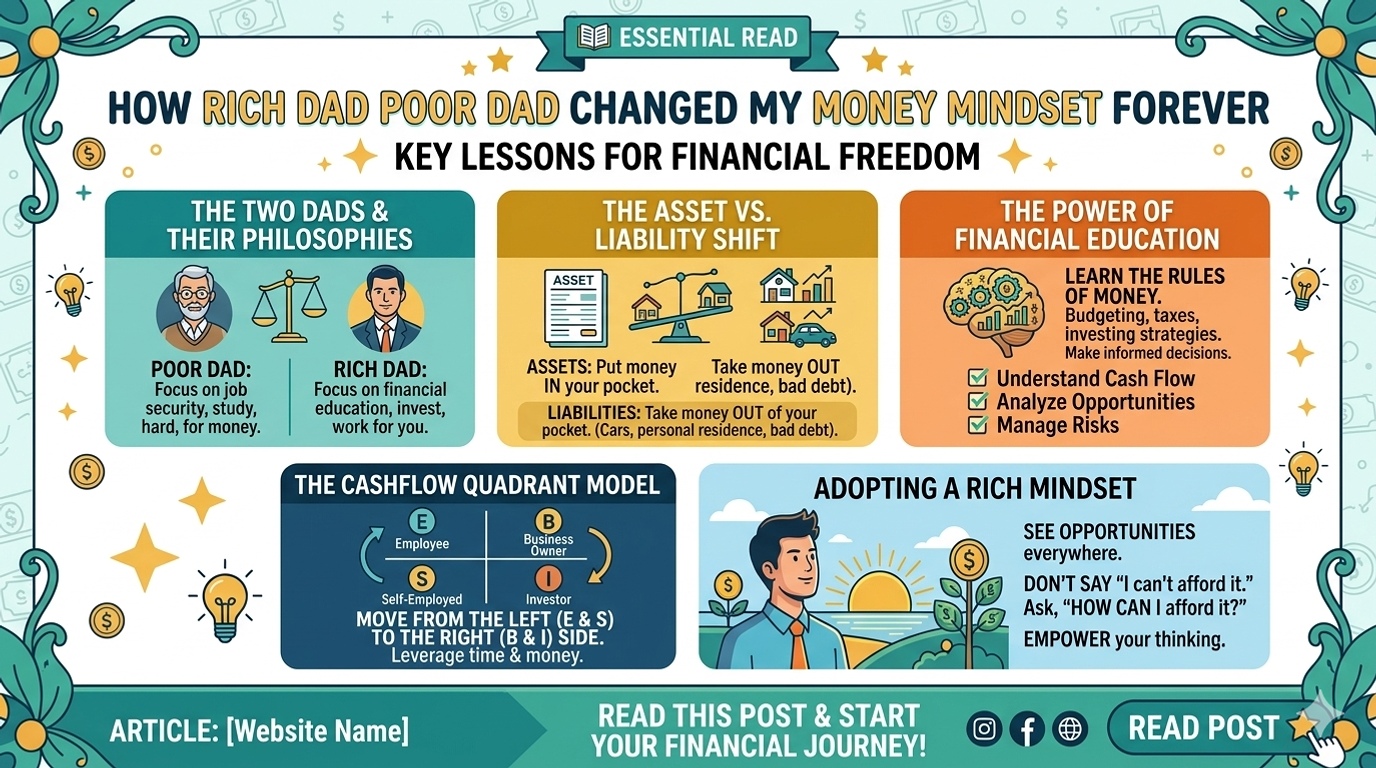
How Rich Dad Poor Dad Changed My Money Mindset Forever
I used to think money was just about paying bills and hoping for a raise. I’m not exaggerating when I say this book walked into my life like a friend I didn’t realize I needed. I stayed up late reading, coffee cooling beside me, notes piling up. The ideas felt risky at first—like stepping onto a new road I didn’t know existed. But the more I read, the more my brain rewired itself. It wasn’t about luck or a lucky loophole; it was about learning to think differently about money. And yes, I’m still surprised by how much a single book can reshape your day-to-day choices.
Before the turning point: my money story
- I believed a steady job and a safe salary were the golden ticket to security.
- I treated debt as a dangerous enemy I should dodge at all costs.
- I equated wealth with a big paycheck, not with smart investments or cash flow.
- I thought “assets” were fancy terms reserved for people who wore suits and talked about the stock market all day.
Looking back, it felt comforting to pretend I had it all figured out. But the truth was I was trading time for money and praying for a raise to change my life. The moment I opened Rich Dad Poor Dad, that comforting illusion started to crack. It wasn’t a finance textbook. It was a practical, stubborn nudge toward a different kind of freedom.
The turning page moment that flipped the switch
There it was, tucked between the chapters: the idea that cash flow matters more than a high salary. The line about assets putting money in your pocket while liabilities drain it felt like a wake-up call. I kept rereading that concept because it challenged every default belief I had. If you want to know where I started shifting from debt fear to asset curiosity, this is it—the moment I learned to stop chasing big paycheques and start chasing reliable income that works while I sleep.
Three big lessons that stuck with me
- Assets over liabilities: I began listing what actually puts money in my pocket—rental income, dividends, or a side hustle that scales—versus what simply drains it (a fancy car loan, unnecessary tech toys, or endless subscriptions).
- Financial education matters more than the paycheck: The book taught me to study money, not just earn it. I started reading about cash flow, taxes, and investing basics, and suddenly the numbers started to make sense.
- Cash flow is the heartbeat of wealth: Rich Dad’s framework pushed me to create streams that don’t rely solely on one job. It’s not about reckless risk; it’s about deliberate, repeatable growth.
From thought to action: practical steps you can copy
- Track every dollar for a month. You’ll spot leakages you didn’t know existed.
- Identify potential assets you can start small with—things like index funds, a micro rental, or a skill-based side hustle.
- Automate savings and set up a separate account for investments, not just a general rainy-day fund.
- Learn the basics of debt: use it as a tool, not a fear. If you use debt wisely to acquire assets, you aren’t playing with fire—you’re building leverage.
- Build a simple routine: read one page a day about money, run a 15-minute budget review weekly, and track your progress monthly.
A little Canadian moment that keeps me grounded
There was a winter Friday after hockey practice when our team parked at a Tim Hortons drive-thru, cocoa steam fogging up the windows, gloves stuffed in pockets, and the radio buzzing with CBC sports. We were broke college students and yet somehow hopeful. We talked about big dreams and tiny savings, arguing about whether to invest in a mutual fund or a vending machine business (yes, really). The laughter and the shared fear in that Canadian chill stuck with me. If a group of friends can dream big on a low budget, why not me? That memory reminds me that money mindset isn’t just about numbers—it’s about community, habits, and showing up consistently, even when funds are tight.
A book I recommend next
If you’re hungry for more practical mindset shifts, I’d add Atomic Habits by James Clear to your reading list. It’s not a money book per se, but it pairs perfectly with Rich Dad Poor Dad’s ideas. It teaches you how tiny daily changes compound into big outcomes, which is exactly what you need to turn a new money mindset into real-life results.
Want to start your own money-mindset shift? Grab the ebook
If you’re ready to dive in and start your own journey toward financial education and freedom, you can download the ebook here: Rich Dad Poor Dad.