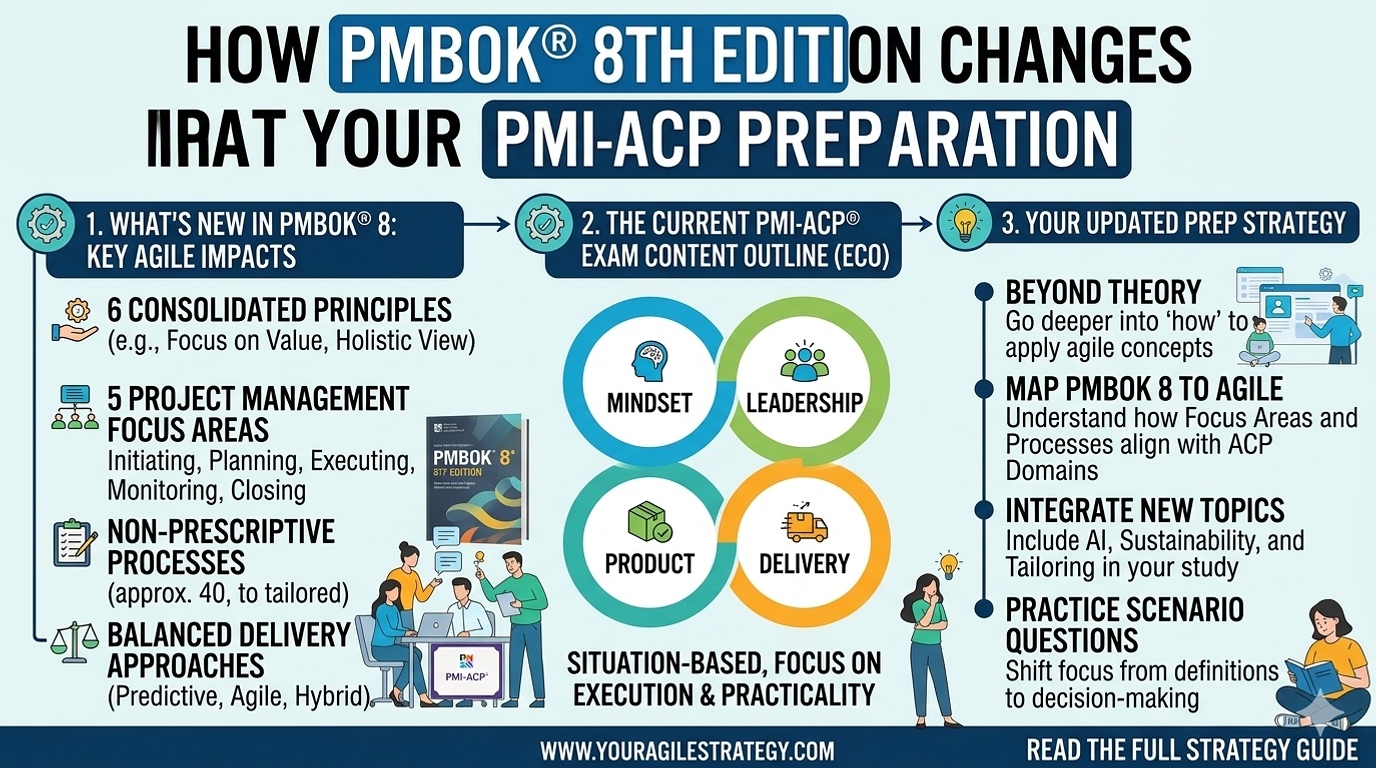
How PMBOK 8th Edition Changes Impact Your PMI-ACP Preparation
Preparing for the PMI-ACP exam can feel daunting, especially with PMBOK 8th Edition changes on the horizon. But the goal is simple: understand how agile practice fits into project management and map your study plan accordingly. To give you a head start, here’s a friendly, beginner-friendly guide that breaks down what’s new, what stays the same, and how to study smart. If you want a handy download right away, grab this PMI-ACP Exam Prep ebook: PMI-ACP Exam Prep ebook.
What’s new in PMBOK 8th Edition?
Think bigger picture. PMBOK 8th Edition emphasizes outcomes, value delivery, and flexibility. You’ll likely notice:
- A principle-based approach that focuses on how to apply practices rather than ticking a long checklist.
- Greater emphasis on tailoring processes and tools to your project’s context.
- Stronger alignment with agile and hybrid delivery models, not just traditional plans.
- Updated terminology that reflects modern, value-driven project work.
- More guidance on stakeholder collaboration, risk-informed decisions, and value realization.
Why these changes matter for PMI-ACP
The PMI-ACP exam tests your ability to apply agile thinking in real projects. With 8th edition shifts, you’ll see questions that reward:
- Adaptability—knowing when to tailor approaches to the team and the context.
- Value-focused planning—prioritizing outcomes over rigid processes.
- Hybrid thinking—combining agile practices with traditional approaches when appropriate.
- Effective stakeholder engagement and collaboration throughout the project lifecycle.
In short, the changes push you to think practically about how agile and project management live together, not in separate worlds. That means your study plan should cover both agile fundamentals and the PMBOK’s integrated, value-driven view.
Smart study tips for this edition
- Start with a solid agile refresher: read up on Scrum, Kanban, and XP basics to build a strong foundation.
- Map PMBOK 8th Edition principles to PMI-ACP exam domains. Create a simple crosswalk showing how each principle supports a domain task.
- Use real-world examples: jot down quick notes from your own projects where tailoring made a difference.
- Practice scenario questions: look for questions that test how you tailor, adapt, and deliver value.
- Keep notes bite-sized: short paragraphs and bullet points are easier to review on busy days.
Sample 4-week study plan
- Review PMBOK 8th Edition changes and core agile concepts. Create your domain-principle map.
- Week 2: Dive into stakeholder engagement, value delivery, and tailoring. Do 20 practice questions per day.
- Week 3: Practice hybrid scenarios and mock exams. Review explanations for every mistake.
- Week 4: Final review, focus on weak areas, simulate exam conditions, and reinforce time management.
Tip: balance reading with hands-on practice. The PMI-ACP exam rewards the ability to apply agile thinking in real situations, not just memorize terms.
Recommended reading and one book you’ll love
Alongside PMBOK 8th Edition guidance, a practical companion can boost your confidence. I recommend Agile Project Management with Scrum by Ken Schwaber. It’s a clear, time-tested resource that helps you translate agile theory into real project actions—perfect for PMI-ACP prep and everyday work alike.
And if you’re after a convenient download to study anywhere, don’t miss the PMI-ACP Exam Prep ebook linked above. It’s designed to reinforce the concepts you’ll see on the test and can be a lifesaver during busy days.
In case you want a quick link again
Direct download: PMI-ACP Exam Prep ebook
Ready to dive in? Start with a friendly, steady pace, and you’ll build the confidence to tackle PMBOK 8th Edition changes and ace the PMI-ACP exam. Good luck, and happy studying!