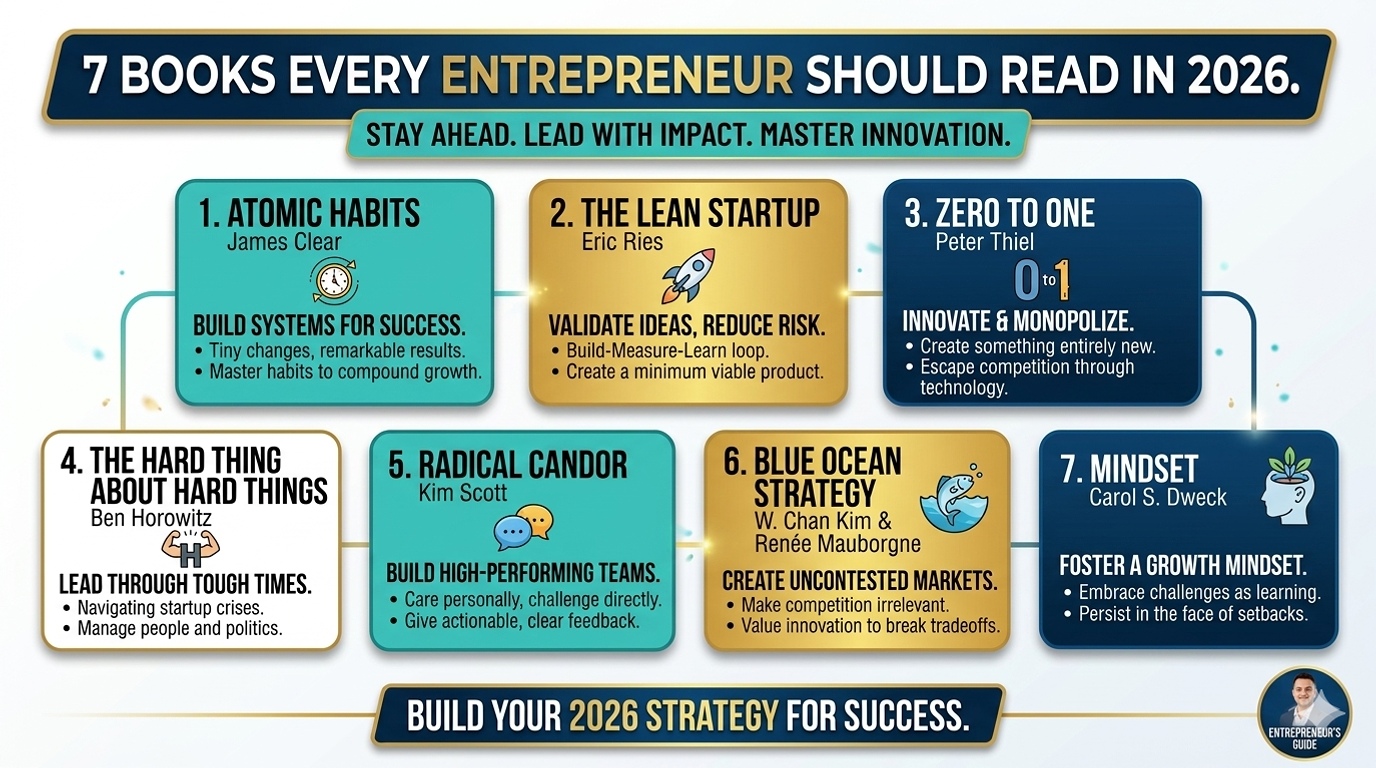
Stepping into 2026 as an entrepreneur means balancing ambitious goals with practical, repeatable actions. These seven books combine timeless business wisdom with modern trends like AI, remote collaboration, and sustainable growth. They’re beginner-friendly, easy to skim, and packed with actionable takeaways you can start using this week.
1. The Lean Startup — Eric Ries
This classic gives you a blueprint for building a startup that learns fast. The core idea is to run small experiments, measure real customer feedback, and pivot or persevere based on data—not on guesswork. In 2026, AI-powered analytics can speed up the feedback loop, letting you test more ideas with less time and still learn quickly.
- Build-Measure-Learn loop to reduce risk
- Minimum viable product (MVP) as a learning tool
- Innovation accounting to track progress beyond vanity metrics
In 2026, this mindset helps you stay adaptable in a fast-changing market and align product development with real customer needs.
2. Atomic Habits — James Clear
Small habits drive big results. Atomic Habits is a friendly, practical guide to building routines that stick, which is essential when juggling product, sales, and leadership tasks.
- Make it obvious: habit stacking and environment design
- Make it attractive and satisfying to reinforce consistency
- Focus on system, not just goals, to see long-term gains
My personal pick for 2026: Atomic Habits. If you’re new to entrepreneurship, this is the simplest, most actionable read to establish daily momentum.
3. Measure What Matters — John Doerr
OKRs (Objectives and Key Results) help teams align on goals and track progress with clarity. This book shows how big ambitions become achievable steps through transparent metrics.
- Align company, team, and individual goals
- Set ambitious but measurable OKRs
- Regular check-ins and transparent progress reporting
Why it matters in 2026: better focus for product launches, marketing campaigns, and growth sprints, especially with remote teams and cross-functional collaboration.
4. Good to Great — Jim Collins
What separates good companies from truly great ones? Collins identifies leadership behaviors, disciplined people, and a relentless focus on the flywheel of success.
- Level 5 leadership and humble ambition
- First who, then what—get the right people on the bus
- Confronting the brutal facts and maintaining long-term discipline
With the rise of digital disruption in 2026, the book’s emphasis on disciplined execution and building lasting cultures is particularly relevant.
5. Zero to One — Peter Thiel
Zero to One is about creating new value rather than competing in crowded markets. It’s a thoughtful nudge for founders who want to build something genuinely new with a unique edge.
- Seek monopolistic insights and durable advantages
- Think boldly about product differentiation and distribution
- A focus on technology and clever, scalable ideas
Note: This book challenges conventional wisdom in a good way and can spark great strategic conversations for any team.
6. The Psychology of Money — Morgan Housel
Money mindset matters as much as math. This book explores how behavior, psychology, and time horizon shape financial outcomes for entrepreneurs who must balance reinvestment with personal risk.
- Wealth is what you don’t see: avoid flashy spending
- Long-term, patient investing and saving
- Risk management and avoiding common money traps
Useful for founders making burn-rate decisions and prioritizing sustainable growth, not just rapid scale.
7. Deep Work — Cal Newport
In a world full of distractions, deep work helps you produce high-quality results in less time. For founders juggling many hats, it’s a lifesaver for focus and productivity.
- Time blocking to protect intense focus
- Reduce shallow tasks and meetings
- Rituals that support high-concentration work sessions
Perfect for anyone trying to shield creative, strategic thinking from constant distractions.
Want a quick, printable guide to these seven books? Download the free companion ebook with summaries and actionable takeaways: 7 Books Every Entrepreneur Should Read in 2026 (PDF) — download now.