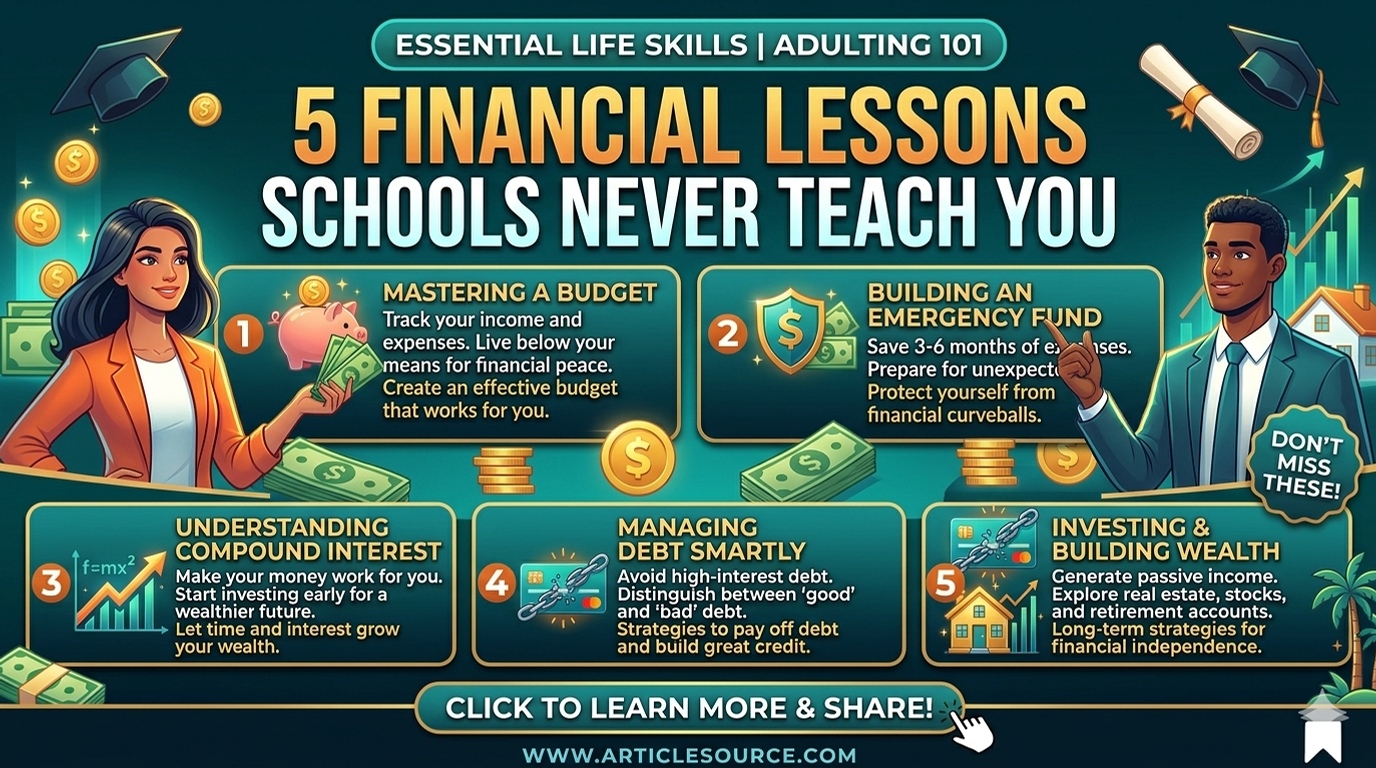
Money lessons I learned the hard way stick around longer than a stubborn snowbank outside a Toronto coffee shop. Schools gave me math formulas, but not the moves that actually grow wealth. Here are five financial lessons schools never teach you, told in my own voice, with a few real-life twists. If you’re Canadian, you’ll spot the local vibe—long winters, Tim Hortons runs, and the quiet power of saving for a rainy day.
Lesson 1: The true cost of money
Price tags lie. Or at least they don’t tell the whole story. I learned this the hard way when I grabbed a credit card with a shiny smile. The sticker price was only the beginning. Interest, fees, and inflation sneak up and bite you when you least expect it.
- Look beyond the monthly payment. Do the math for the full loan: payments plus fees over the life of the loan.
- Read the fine print. APR isn’t just a number; it’s the real cost of borrowing.
- Avoid high-interest debt whenever possible. If you must borrow, shop around and pay it down fast.
Lesson 2: Pay yourself first
I used to spend first and save what's left. Spoiler: there was never anything left. Then I flipped the script and treated savings like a bill I actually pay on payday.
- Automate your savings—set it and forget it.
- Build an emergency fund with 3–6 months of expenses.
- Increase contributions as your income grows—even a little counts over time.
Lesson 3: Assets vs. liabilities
My teenage brain loved the latest gadget more than a stable fund. I learned quickly that a new phone is not an asset if it drains money. Assets put money in your pocket; liabilities take money out.
- List assets (things that earn or save you money) and liabilities (things that cost you money).
- Invest in small, steady assets: dividend stocks, a side gig, real estate income, or a simple online business.
- Pause purchases that don’t create value while you’re building momentum.
Lesson 4: The power of compounding
Time is money’s best friend. I wish I’d started earlier. Even tiny, regular contributions grow because of compounding.
- Start now, even with small amounts.
- Set up automatic monthly contributions to an investment or retirement account.
- If you’re in Canada, use tax-advantaged accounts like a Tax-Free Savings Account (TFSA) or Registered Retirement Savings Plan (RRSP) to maximize growth.
Lesson 5: Learn, network, and practice financial literacy
Knowledge compounds, too. I stumbled into free finance meetups, podcasts, and library books that rewired my thinking about money. You don’t have to go solo—find a community, share tips, and test ideas in real life.
- Consume beginner-friendly resources—books, blogs, podcasts, and videos.
- Find a mentor or join a local money group; coffee chats and small wins add up.
- Experiment with budget challenges, track a week of spending, or try a no-spend weekend.
My go-to book that reshaped my money mindset
One practical read I always recommend is Rich Dad Poor Dad. It nudges you to rethink assets, cash flow, and how we talk about money. If you’re ready for a straightforward doorway into these ideas, you can download the ebook here.
So that’s my five. Short, practical, and surprisingly doable. If you’re itching to start, pick one lesson this week—maybe automate a small savings transfer or list your assets and liabilities. Small moves beat big dreams, especially when you’re building a life with Canada’s changing seasons in mind.