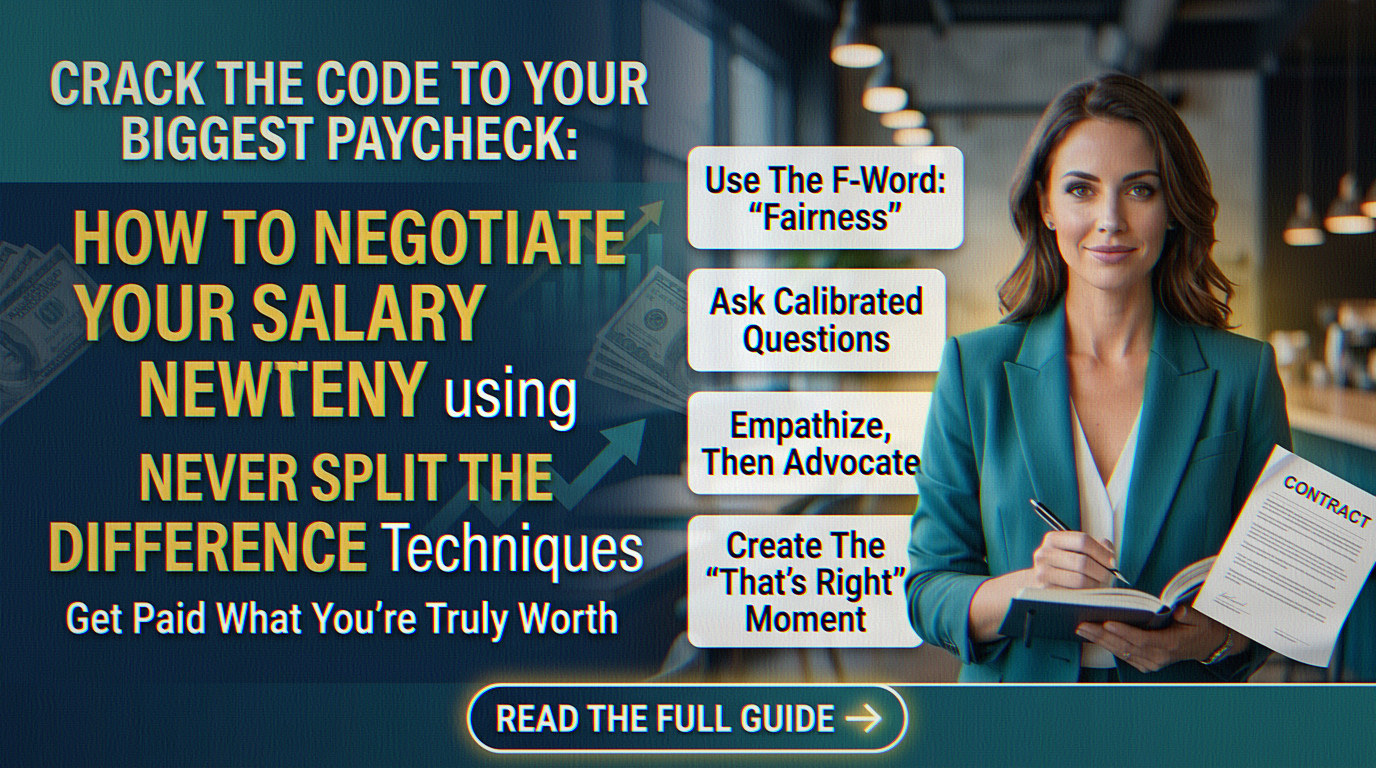
Negotiating my salary used to feel like stepping onto the ice with a too-tight skates and a mouthful of nerves. But I learned a few tricks from Never Split the Difference that changed the game. I’m not promising miracles, just practical, human-friendly tactics that work in real life—whether you’re fresh out of college, switching careers, or climbing the corporate ladder in Canada. And yes, I’m bringing a little Canadian flavor into this chat—think Tim Hortons runs, maple-sweetened decisions, and the “eh?” that keeps things friendly.
What I discovered about negotiation: it’s a conversation, not a battle
When I first asked for a raise, I treated it like a demand slip. It didn’t go well. Then I tried a different approach—one that feels more like a conversation than a confrontation. The key idea? Tactical empathy. I listened first, named the other person’s perspective, and then explained my value with calm confidence. The result wasn’t a jackpot offer, but a clear path forward and a counteroffer that respected both sides.
Prep like a pro: do your homework before you knock on the door
- Know your market value: look up salary ranges for your role in your city, your industry, and your experience level. Glassdoor, LinkedIn salary insights, and local recruiters can help.
- Document your wins: quantify your impact with numbers—project delivery, money saved, extra clients, or efficiency gains.
- Pick your timing: after a big win, during performance reviews, or when budgets reset are the best moments to bring this up.
- Decide your target and a realistic fallback: what’s your ideal number, what’s a solid middle, and what’s your walk-away point?
Never Split the Difference techniques that actually stick
Here’s how I applied the core ideas in a way that feels natural and not manipulative:
- Mirroring: Repeat the last few words your boss says, or finish their sentence. It buys you a beat to think and invites them to reveal more.
- Labeling: Name the emotion you hear, like “It sounds like budget constraints are the main hurdle.” It’s not interrogating; it’s clarifying.
- Calibrated questions: Ask open-ended questions that force a thoughtful response, e.g., “How can we align my compensation with my impact on the team this year?”
- No-or-yes narrowing: Show options rather than pushing a single outcome. “Would a 5% raise plus quarterly milestones be workable, or should we explore other forms of compensation?”
- Accusation audit: Address fears before they’re voiced: “You may be thinking I’m asking for too much given the company’s current growth—here’s why I believe this is fair based on my results.”
Conversation scripts you can actually use (starter lines)
Below are simple, friendly lines you can drop into your meeting. Personalize them so they sound like you.
- “I’ve really enjoyed delivering X and Y this year. Here’s the impact in numbers: A, B, C. I’d like to talk about how my compensation can reflect that contribution.”
- “What’s the best way we can structure my compensation to align with the value I bring to the team?”
- “If the budget is tight this quarter, could we set milestones and review the compensation after those targets are hit?”
- “I’m committed to growing here. What would it take to adjust my role or pay to reflect that commitment?”
Role-play your way to confidence: a quick practice routine
Practice with a friend or alone in front of a mirror. Do these in order:
- State your value in one minute, with concrete numbers.
- Mirror the other person’s statements, then label emotions or concerns.
- Ask two calibrated questions that open up the discussion.
- Summarize the conversation succinctly and propose the next step.
A little Canadian flare: why I love negotiating here
Canada teaches you to read the room with politeness and patience. When I negotiate, I lean into that easy-going vibe—no high-pressure “sales” energy. The goal is clarity, fairness, and a path forward that respects both people. And yes, I’ll admit it: a maple-syrup pause can be the perfect moment to let a solid number sink in before you respond. It’s not about getting the biggest number; it’s about getting a number that feels right for both sides in a country where collaboration often beats confrontation.
Book recs that fuel your negotiation skills
For a deeper dive into human-centered negotiation, I’m a fan of a few essentials. One that’s a constant companion for me is Never Split the Difference. If you haven’t read it yet, you can download the book here: Never Split the Difference.
And for a broader mix of thinking and decision-making, I also recommend Thinking, Fast and Slow by Daniel Kahneman. It helps you spot cognitive traps in high-stakes talks—perfect when you’re calibrating questions and labeling.
From the desk to the meeting room: next steps
- Prepare a simple one-page overview of your achievements and market data.
- Draft your calibrated questions and practice them aloud.
- Schedule the talk, choose a calm moment, and go in with calm confidence.
If you’re craving more hands-on practice and real-world examples, the book link above is a great place to start. It’s helped me shift from hesitation to clarity, and I believe it can do the same for you. You’ve got this—your value deserves to be recognized, and your voice deserves to be heard.